
How to Choose a Social Media Management Company: 10 Questions to Ask
Why Choosing a Social Media Management Company Affects Business Growth Outcomes
Choosing the right social media management company can significantly impact business growth, from increasing leads to enhancing brand visibility. Effective social media management directly drives key metrics like engagement, reach, and conversions, which ultimately influence revenue.
An agency's ability to develop tailored strategies that align with business goals fosters increased brand awareness and leads generation. However, a poor hiring decision can risk ineffective campaigns, leading to missed opportunities, lower engagement rates, and wasted marketing budgets. Hiring the wrong company can stall growth and even harm a brand’s reputation, which takes longer to rebuild.
The right choice ensures consistent content creation, effective paid strategies, and robust social media analytics to monitor growth, delivering measurable results. It can help businesses adapt quickly to changes, such as algorithm updates, and boost inbound referrals. A strategic partner can elevate a brand's social media presence, impacting both short-term engagement and long-term business outcomes.
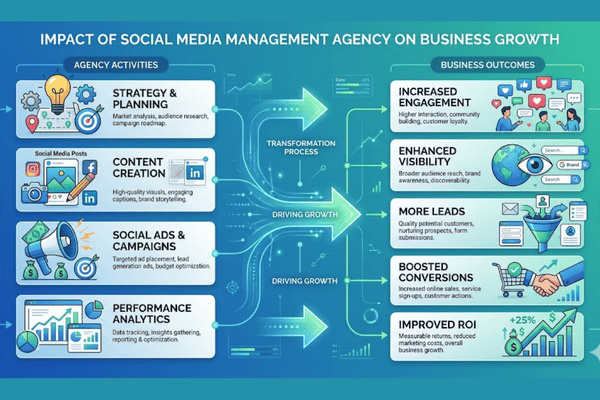
How a Social Media Management Company Impacts Leads, Engagement, and Brand Visibility
The main ways a social media management company impacts business results are listed below.
Lead generation is driven by tailored social media strategies that attract and convert potential customers through targeted content and ads.
Audience engagement grows by consistently interacting with followers, responding to comments, and creating content that sparks conversations.
Brand visibility increases when campaigns are optimized to reach broader audiences, boosting impressions and recognition.
Content reach expands as the company utilizes various platforms, from organic posts to paid ads, to amplify your brand's message.
Conversion support is provided through strategic call-to-actions, optimized landing pages, and retargeting efforts that guide leads to action.
What Risks Are Associated with Hiring the Wrong Social Media Management Company?
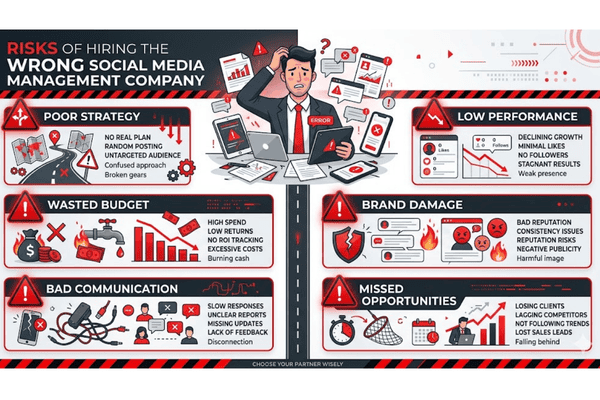
Hiring the wrong social media management company can pose risks, including poor strategy, wasted budgets, and missed opportunities.
The main risks of hiring the wrong social media management company are listed below.
Poor strategy leads to misaligned campaigns that don’t connect with the audience, resulting in weak business growth.
Wasted budget occurs when ineffective campaigns or ad optimizations fail to deliver real returns on investment.
Bad communication with clients causes confusion, delays, and missed deadlines, ultimately hindering social media growth.
Low performance due to unoptimized social media strategies results in lower engagement rates and fewer conversions.
Brand damage happens when inappropriate or inconsistent messaging affects public perception and customer trust.
Missed opportunities arise when the company doesn’t leverage trending topics, campaigns, or new social media features to engage audiences.
What Results Should a Reliable Social Media Management Company Realistically Deliver?
A reliable social media management company should realistically deliver measurable outcomes like engagement growth, lead generation, and content consistency.
The realistic results a reliable social media management company should deliver are listed below.
Engagement growth through consistent interaction, leading to increased comments, shares, and overall interaction with followers.
Lead generation by creating optimized campaigns that attract and convert new customers from targeted social media content.
Content consistency across all platforms, ensuring regular posting and alignment with the brand’s voice and objectives.
Reporting with clear and actionable insights, showing progress toward marketing goals, including key performance metrics (KPIs).
Realistic ROI expectations that match the company’s budget and goals, ensuring a measurable return on investment from social media efforts.
How Do You Evaluate a Social Media Management Company Before Shortlisting?
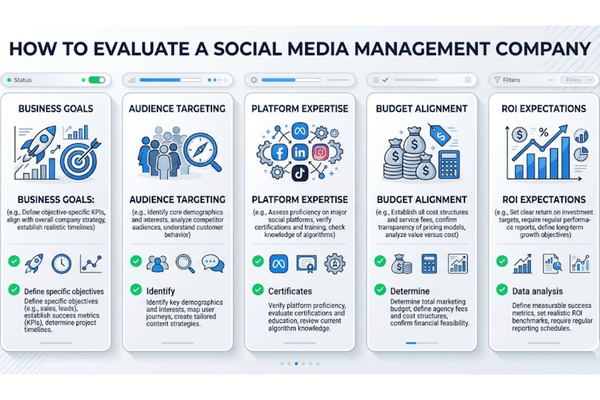
Evaluating a social media management company before shortlisting requires a thorough assessment based on goal definition, audience targeting, platform fit, budget, and ROI expectations.
The evaluation steps to take before shortlisting a social media management company are:
Define your business goals, ensuring alignment with the company's marketing objectives and measurable outcomes.
Identify your target audience to confirm the agency’s ability to reach and engage the right demographics.
Evaluate platform specialization by checking whether the company’s expertise aligns with the platforms you need for your business.
Set a realistic budget that fits your marketing goals, allowing room for campaign adjustments and testing.
Set clear ROI expectations, ensuring the company understands and can measure the specific returns your business seeks from social media campaigns.
How Should a Business Define Goals Before Hiring a Social Media Management Company?
A business should define goals before hiring a social media management company by ensuring clear alignment with their marketing objectives, growth targets, and lead generation aspirations.
The key goals a business should define before hiring are listed below.
Marketing objectives that clearly outline the purpose of social media efforts, whether for brand awareness, sales, or customer service.
Growth targets, setting measurable goals for audience growth, engagement rates, and conversion outcomes.
Brand awareness goals to track improvements in visibility, recognition, and reach across social media platforms.
Lead generation expectations, identifying the number and quality of leads expected from social media efforts.
Conversion goals to determine how social media activity will drive actual sales or conversions for the business.
How Does Audience Targeting Influence the Choice of a Social Media Management Company?
Audience targeting influences the choice of a social media management company because a company's ability to reach and engage the right audience directly impacts campaign success.
The audience targeting factors that influence company choice are listed below.
Buyer personas help define the ideal customer, ensuring the company can craft personalized strategies for engagement.
Customer demographics such as age, location, and income must align with the company’s expertise in reaching these groups.
Platform usage affects whether the company specializes in platforms that your target audience uses the most.
Market segmentation ensures that campaigns are tailored to specific audience groups, increasing relevance and performance.
Audience behavior analysis helps the company create content that resonates with and engages the target market effectively.
What Platforms Should a Social Media Management Company Specialize in for Your Business?
A social media management company should specialize in the platforms that matter most to your business, aligning its expertise with where your audience spends time.
The platform factors to check before hiring are listed below.
Instagram specialization works well for businesses with visual products, lifestyle brands, and younger audiences.
Facebook expertise is crucial for broader outreach, especially for businesses targeting diverse demographics.
LinkedIn proficiency is necessary for B2B companies, professionals, and thought leaders aiming for industry-specific engagement.
TikTok experience helps tap into the growing trend of short-form video content for younger, trend-conscious audiences.
Channel strategy alignment ensures the company optimizes your content for each platform’s unique features and audience preferences.
How Do Budget and Expected ROI Shape Your Selection of a Social Media Management Company?
Budget and expected ROI shape your selection because they determine which social media management companies can realistically meet your financial constraints while delivering measurable returns.
The budget and ROI factors shaping selection are listed below.
Budget flexibility helps you understand if the company can deliver quality services within your financial limits.
Expected ROI should be clearly defined, with the company outlining how their efforts will translate into measurable returns.
Pricing models such as hourly rates or fixed packages must align with your budget and campaign scope. If you're still deciding on the right fit, choosing the right social media management package can help you match your investment to realistic outcomes.
Investment in tools and services should ensure the company can use advanced analytics, scheduling, and optimization tools without exceeding your budget.
Service value helps you assess whether the company's offerings justify the investment, ensuring long-term profitability.
What Experience Should a Social Media Management Company Have in Your Industry?
Industry experience matters because a company’s familiarity with your specific audience, content style, and competitive landscape directly impacts the relevance and success of your campaigns.
The industry experience factors that influence company choice are listed below.
Niche knowledge ensures the company understands your market’s trends, language, and audience preferences.
Campaign performance history showcases the company’s ability to deliver results in similar industries or sectors.
Market familiarity allows the company to identify key competitors and craft strategies that set you apart.
Specialized experience helps ensure the company is well-versed in industry-specific challenges, regulations, and opportunities.
Business fit ensures the company can align its strategies with your business model, values, and growth objectives.
How Does Industry-Specific Experience Improve Campaign Performance?
Industry-specific experience improves campaign performance because a deep understanding of the sector allows for more tailored, effective strategies.
The ways industry-specific experience improves campaign performance are listed below.
Campaign performance improves with a proven track record in your industry, leading to higher success rates.
Sector knowledge allows for better content alignment, ensuring campaigns resonate with your specific audience.
Audience relevance is enhanced when the company has a keen understanding of your target demographic’s behaviors and needs.
Competitive insight provides an edge in outperforming industry competitors by identifying gaps and opportunities in the market.
Specialized strategy results in campaigns that are crafted specifically for your industry, increasing relevance and engagement.
What Examples or Case Studies Should a Social Media Management Company Provide?
A social media management company should provide examples or case studies such as success stories that demonstrate their ability to deliver real results.
The examples or case studies a company should provide are listed below.
Case studies showcasing detailed examples of previous campaigns, highlighting strategies and measurable outcomes.
Portfolio that includes a variety of industry-specific content types and campaign formats to demonstrate versatility.
Success stories that highlight past clients’ positive experiences and tangible results, such as increased engagement or conversions.
Campaign examples that show how the company adapts strategies to fit different platforms and marketing goals.
Results proof with clear metrics such as growth in leads, engagement rates, or ROI, to substantiate claims of success.
What Are the Signs of Generic vs. Specialized Experience?
The signs of generic vs specialized experience include differences in approach, understanding of your industry, and the ability to create tailored strategies for your business.
The signs of generic versus specialized experience are listed below.
Generic experience focuses on broad strategies, while specialized experience includes a deep understanding of your industry and market.
Template-based work often lacks personalization, whereas custom strategies are developed specifically for your business needs.
Limited industry knowledge in generic firms contrasts with relevant expertise in specialized companies, which know your audience and competition well.
One-size-fits-all campaigns are common with generic experience, while specialized experience crafts campaigns aligned with your brand voice and audience.
General service offerings are typical of generic companies, while specialized firms bring nuanced services that target your unique market needs.
What Strategy Should a Social Media Management Company Use for Your Business?
A social media management company should use a strategy that aligns with your content goals, marketing funnel, and brand voice to ensure success.
A representative summary of how strategy should match business needs includes the following.
Content strategy should be developed based on your brand's voice, audience preferences, and industry trends.
Marketing funnel alignment ensures the strategy attracts, nurtures, and converts your leads at every stage of their journey.
Brand voice consistency is key to maintaining a unified, authentic identity across all social media platforms.
Campaign planning should focus on delivering measurable goals, ensuring tactics fit your business's overarching strategy.
Business strategy integration allows social media efforts to support broader business objectives, increasing overall growth.
How Does a Social Media Management Company Build a Content Strategy?
A social media management company builds a content strategy by conducting audience research, defining content themes, and establishing a posting schedule to optimize engagement.
The main steps in building a content strategy are listed below.
Planning begins with understanding your business goals and determining the type of content that resonates with your audience.
Audience research ensures the content is tailored to your followers' interests, needs, and behaviors.
Content themes are developed to ensure consistency and relevance, covering topics that align with your brand.
Posting schedule is created to maintain regular engagement while optimizing content release times for maximum impact.
Campaign planning supports content creation by aligning posts with promotions, seasonal trends, and business milestones.
How Should a Social Media Management Company Align Content with the Marketing Funnel?
A social media management company should align content with the marketing funnel by crafting content that matches each stage: awareness, consideration, and conversion.
The funnel alignment steps are listed below.
Awareness: Content should focus on introducing the brand to new audiences through engaging, informative posts.
Consideration: Share content that nurtures leads, such as case studies, testimonials, and detailed product information.
Conversion: Focus on content that drives action, including calls-to-action, limited offers, and promotional content.
Lead nurturing: Develop content to maintain interest and move leads smoothly through the funnel.
Content stages: Ensure each piece aligns with the funnel stage it targets, supporting your overall marketing strategy.
What Role Does Brand Voice Play in a Social Media Management Company’s Strategy?
Brand voice plays an important role in a social media management company’s strategy because it helps shape how your brand communicates and builds consistency across all content.
The ways brand voice supports strategy are listed below.
Tone of voice sets the emotional appeal of your content, ensuring it resonates with your target audience.
Brand identity is reinforced through consistent language, helping your audience recognize and relate to your brand.
Messaging consistency ensures all content remains aligned with your brand’s core values and messaging.
Content tone reflects your brand's personality, whether it's professional, casual, or humorous, impacting engagement.
Brand personality gives your content a distinctive voice, creating a deeper connection with your audience.
What Services Are Included in a Social Media Management Company Package?
A social media management company package typically includes comprehensive services like content creation, scheduling, engagement, and reporting to ensure effective social media marketing.
The service package scope includes the following:
Content creation: Designing posts, writing captions, and creating visuals tailored to your brand.
Scheduling: Managing the timing of posts to maximize engagement and reach.
Engagement: Responding to comments, messages, and fostering relationships with your audience.
Reporting: Providing insights into campaign performance, engagement rates, and key metrics.
Social media management services: Overseeing your social presence, campaign execution, and ongoing strategy optimization.
Does a Social Media Management Company Include Content Creation and Design?
A social media management company includes content creation and design when it provides comprehensive creative services, covering both visual design and written content to support brand engagement.
The content creation and design services are listed below.
Content creation: Writing engaging captions and blog posts that align with your brand's goals and audience.
Design: Creating visuals such as graphics, banners, and infographics that enhance your social media presence.
Graphics: Developing custom-designed visuals that reflect your brand’s aesthetic and messaging.
Captions: Crafting compelling text to accompany visuals, ensuring clear communication and engagement.
Creative assets: Providing other visual and written content, such as videos or interactive media, to support campaigns.
How Does a Social Media Management Company Handle Scheduling and Publishing?
A social media management company handles scheduling and publishing by planning content, automating posts, and ensuring timely delivery across platforms.
The scheduling and publishing steps are listed below.
Content calendar is developed to map out posts, ensuring consistency and relevance for each platform.
Posting workflow includes preparing content, reviewing, and scheduling it for publication across multiple channels.
Automation tools allow for efficient, timely publishing without manual intervention, ensuring posts go live at optimal times.
Platform management ensures each platform's unique needs, formats, and best practices are followed for each post.
Regular adjustments are made to ensure content remains aligned with audience engagement trends and feedback.
Does a Social Media Management Company Provide Community Management and Engagement?
A social media management company provides community management and engagement by actively interacting with the audience, responding to comments, and managing social media conversations to foster brand loyalty.
The community management and engagement services are listed below.
Engagement includes interacting with followers by liking, sharing, and commenting on their posts to build relationships.
Comment replies ensure timely responses to audience inquiries, questions, and feedback to maintain engagement.
Inbox management keeps direct messages and private inquiries organized and ensures prompt, effective communication.
Audience interaction through polls, surveys, and interactive content keeps the community engaged and active.
Social care involves handling customer concerns, complaints, and feedback professionally to maintain a positive brand image.
How Does a Social Media Management Company Measure Success and ROI?
A social media management company measures success and ROI through tracking KPIs, analyzing performance data, and linking outcomes to business goals.
Measurement is a critical component of social media management, ensuring campaigns align with business objectives. KPIs like engagement rates, conversion rates, and lead generation help track real business impact. Performance tracking allows for timely adjustments to improve results and deliver measurable returns.
What KPIs Should a Social Media Management Company Track?
A social media management company should track KPIs such as reach, engagement, clicks, and conversions to measure the effectiveness of its social media strategies.
The KPIs a social media management company should track are listed below.
Reach measures how many people have seen your content, expanding brand visibility.
Engagement tracks interactions like likes, comments, shares, and direct messages, showing how active your audience is.
Clicks measure the number of times a user clicks on links in posts, driving traffic to your website or landing pages.
Conversions track how many social media interactions lead to actual sales or sign-ups.
Lead generation helps track the number of potential customers captured through forms or other actions on social media.
How Do Engagement, Reach, and Conversions Differ in Performance Measurement?
Engagement, reach, and conversions differ in performance measurement because each one tracks a distinct outcome at different stages of the customer journey.
The differences between engagement, reach, and conversions are listed below.
Engagement measures how people interact with your content, indicating audience interest and brand affinity.
Reach tracks how many unique users have seen your content, reflecting brand visibility and awareness.
Conversions measure how many of those interactions or views lead to desired actions like purchases or sign-ups.
Performance measurement should balance these metrics to gauge both awareness and the effectiveness of content in driving actions.
Analytics help fine-tune campaigns by tracking all three metrics and adjusting strategies accordingly.
What Content Creation and Approval Workflow Does a Social Media Management Company Follow?
A social media management company follows a structured content workflow that includes planning, approval processes, and revisions to ensure brand consistency and timely publishing.
Content workflow involves collaboration between the client and the company to align on vision, refine ideas, and ensure everything is on brand before publishing. This process ensures high-quality output and smooth content delivery.
How Does a Social Media Management Company Plan and Approve Content Calendars?
A social media management company plans and approves content calendars by mapping out posts, setting deadlines, and aligning with the brand’s objectives to ensure consistency.
The steps for planning and approving content calendars are listed below.
Content calendar planning begins with setting goals, identifying themes, and deciding post frequency.
The approval process involves client feedback on drafts, ensuring the content meets expectations and aligns with goals.
Content schedule establishes the best dates and times to post for maximum engagement.
Workflow coordination ensures timely creation, review, and approval of content to avoid delays.
Monthly content review allows for flexibility and adjustments based on performance trends or emerging topics.
What Revision Process Should a Social Media Management Company Offer?
A social media management company should offer a revision process that includes feedback rounds, edit cycles, and final approval to ensure content meets expectations before publishing.
The revision process steps are listed below.
Feedback is gathered from clients on initial drafts to ensure alignment with objectives.
Edit cycle involves making changes based on feedback to improve clarity, relevance, and tone.
Approval rounds allow the client to review and approve content after revisions are made.
Content changes are made in collaboration with the client, ensuring content meets high standards.
Quality control is implemented before final publishing to ensure no errors or inconsistencies.
How Does a Social Media Management Company Maintain Brand Consistency?
A social media management company maintains brand consistency by aligning the tone, visuals, and messaging across all platforms to ensure a cohesive and recognizable brand presence.
The ways brand consistency is maintained are listed below.
Visual identity is ensured by using consistent logos, color schemes, and design elements across posts and ads.
Tone is kept consistent by adopting a voice that reflects your brand's personality in all communications.
Messaging remains aligned with your brand’s core values, ensuring every post reinforces your key messages.
Style guide is followed to standardize language, imagery, and overall presentation, preserving brand identity.
Content standards are implemented to maintain high-quality visuals and copy, matching your brand's aesthetics and goals.
Who Will Manage Your Account in a Social Media Management Company?
Account management in a social media management company involves a combination of in-house teams, outsourcing, and defined team roles to ensure efficient service delivery and strategy execution.
The account management structure includes a combination of specialists to ensure effective service:
In-house teams provide direct, hands-on management, ensuring high engagement and personalized service.
Outsourcing may be used for specific tasks or additional expertise in design, copywriting, or analytics.
Team roles include strategists, content creators, and analysts working together to meet your business goals.
Account managers oversee the entire process, ensuring a seamless experience and clear communication with clients.
Service delivery is optimized with clear roles and responsibilities, ensuring your needs are met consistently.
Does a Social Media Management Company Use In-House Teams or Outsourcing?
A social media management company may use both in-house teams and outsourcing depending on the specific needs of the client and the delivery model adopted.
The account delivery models are listed below.
In-house team provides direct control, ensuring faster response times and consistency in service delivery.
Outsourcing can offer specialized expertise, such as in graphic design or content writing, when required for specific campaigns.
Team model flexibility allows the company to scale resources based on the client’s demands and project scope.
Account support involves both internal and external resources working together to meet client objectives effectively.
Execution of strategies involves coordinated efforts between the in-house team and outsourced talent to optimize results.
What Roles Are Involved in Managing Your Social Media Accounts?
The roles involved in managing social media accounts include a team structure that ensures comprehensive coverage of all aspects of social media management, from strategy to content creation.
The main social media management roles are listed below.
Account manager oversees all account activities, ensuring strategies align with client goals and managing communication.
Content creator develops compelling content, including captions, graphics, and videos, tailored to the brand.
Designer focuses on creating visually appealing assets, ensuring that each post aligns with brand identity.
Strategist crafts social media plans, choosing the best platforms and strategies for achieving business goals.
Community manager interacts with followers, responds to inquiries, and ensures positive brand engagement across platforms.
How Does Team Structure Affect Performance and Communication?
Team structure affects performance and communication because clear organization, defined roles, and collaborative workflows improve efficiency and service delivery.
The ways team structure affects performance and communication are listed below.
Performance is enhanced when roles are clearly defined, ensuring each team member focuses on their area of expertise.
Communication flows more smoothly when there are clear channels between teams and clients, ensuring timely updates and feedback.
Workflow optimization ensures that tasks are completed efficiently, with minimal overlap or gaps in service delivery.
Collaboration fosters innovation by encouraging the exchange of ideas, ensuring that strategies and content are impactful.
Accountability within the team ensures that each member takes responsibility for their part in achieving client goals.
How Does a Social Media Management Company Communicate with Clients and Share Updates?
A social media management company communicates with clients through regular updates, ensuring transparency and providing detailed reporting via preferred communication channels.
The communication process includes the following.
Client communication is maintained through scheduled meetings, email updates, or project management tools.
Updates are shared regularly, including performance reports, campaign adjustments, and upcoming content plans.
Transparency is emphasized, with clear and open communication regarding goals, challenges, and results.
Reporting includes insights into key metrics like engagement rates, impressions, and ROI, providing clear data-driven feedback.
Communication channels are flexible, including email, calls, and messaging apps, depending on the client’s preference.
How Often Should a Social Media Management Company Communicate with Clients?
A social media management company should communicate with clients regularly, with communication frequency depending on project scope, client preferences, and reporting needs.
The recommended communication frequency options are listed below.
Weekly check-ins keep clients informed of progress and allow for quick adjustments to strategies or content.
Monthly reports provide comprehensive performance overviews, including key metrics and strategic recommendations.
Ad hoc meetings can be scheduled as needed to discuss urgent matters or new campaign ideas.
Regular updates on social media performance and upcoming content ensure clients are aligned with ongoing efforts.
Timely responses to client inquiries, ensuring quick resolutions and maintaining a transparent working relationship.
What Communication Channels Should a Social Media Management Company Use?
A social media management company should use communication channels such as email, calls, messaging platforms, and project management tools to keep clients informed and engaged.
The communication channels a company should use are listed below.
Email is used for formal updates, detailed reports, and important communications.
Calls are used for in-depth discussions, strategic planning, and addressing complex issues.
Messaging platforms like Slack allow for quick, real-time communication and day-to-day updates.
Project management tools ensure task tracking, scheduling, and client collaboration in a structured, transparent way.
Client reporting is shared through accessible channels to keep clients updated on performance and campaign success.
How Transparent Should a Social Media Management Company Be with Data and Updates?
A social media management company should be transparent with data and updates by providing detailed, accurate performance insights and consistently reporting on key metrics.
The transparency standards for data and updates are listed below.
Data reporting should include clear, understandable metrics that reflect the effectiveness of campaigns and strategies.
Updates are shared regularly, detailing progress toward goals and any adjustments needed for better results.
Analytics must be accessible, ensuring that clients can track their performance and make informed decisions.
Performance reporting includes easy-to-read charts, graphs, and summaries that highlight successes and areas for improvement.
Client trust is built through honest, transparent communication, ensuring both parties are aligned in expectations and results.
What Tools and Technologies Does a Social Media Management Company Use?
A social media management company uses tools like scheduling software, analytics tools, and optimization platforms to manage, analyze, and enhance social media campaigns efficiently.
The technology stack includes the following.
Scheduling software allows for automated posting, ensuring timely delivery across multiple platforms without manual intervention.
Analytics tools provide insights into campaign performance, helping measure success and make data-driven decisions.
Optimization platforms are used to refine paid campaigns, maximize engagement, and improve overall performance.
Social media management tools integrate various platforms, streamlining content management and client collaboration.
Collaboration tools enhance communication within the team and with clients, improving workflow and service delivery.
How Do Scheduling Tools Improve Efficiency in a Social Media Management Company?
Scheduling tools improve efficiency in a social media management company by automating posts, saving time, and ensuring consistent publishing across platforms.
The ways scheduling tools improve efficiency are listed below.
Automation allows posts to be scheduled in advance, reducing the time spent on manual publishing.
Time saving is achieved by creating posts in batches and scheduling them for multiple days or weeks.
Workflow is streamlined by organizing content in a calendar, helping teams stay on track.
Publishing consistency ensures posts go live at optimal times, without needing manual oversight.
Content tracking allows for easy monitoring and adjustments in real-time, improving campaign performance.
What Analytics Tools Should a Social Media Management Company Use?
A social media management company should use analytics tools such as Google Analytics, Sprout Social, and Hootsuite Insights to track performance, engagement, and ROI.
The analytics tools a company should use are listed below.
Google Analytics measures website traffic, conversions, and user behavior from social media traffic.
Sprout Social provides insights into engagement rates, audience growth, and content performance across platforms.
Hootsuite Insights tracks real-time analytics, helping monitor brand sentiment and overall campaign success.
Facebook Insights offers platform-specific metrics such as reach, impressions, and engagement rates.
BuzzSumo helps identify top-performing content and trending topics to refine content strategy.
How Does Tool Selection Impact Performance Tracking and Optimization?
Tool selection impacts performance tracking and optimization because the right tools provide accurate data, improve workflow, and offer actionable insights to optimize social media campaigns.
The ways tool selection affects performance tracking and optimization are listed below.
Performance tracking improves with tools that collect detailed data on key metrics like reach, engagement, and conversions.
Reporting accuracy is ensured when tools consolidate data from all platforms, providing a unified view of campaign performance.
Optimization is made easier by tools that suggest improvements based on real-time data and analytics.
Workflow efficiency increases with tools that automate scheduling, data collection, and reporting tasks.
Data insights from advanced analytics platforms allow for targeted adjustments to strategies for better outcomes.
What Pricing, Contracts, and Policies Should a Social Media Management Company Offer?
A social media management company should offer clear pricing models, well-defined contract terms, and transparent policies to ensure smooth service delivery and client satisfaction.
Commercial policies should align with the client's needs and the services provided.
Pricing models should be straightforward, with options for hourly rates, monthly retainers, or project-based pricing.
Contract terms should define the scope of work, service duration, and payment schedules to avoid misunderstandings.
Policies should include cancellation terms, client responsibilities, and the company's expectations for service delivery.
What Pricing Models Do Social Media Management Companies Use?
Social media management companies use pricing models such as monthly retainers, project-based pricing, and hourly rates to cater to different client needs and budgets.
The pricing models used by social media management companies are listed below.
Monthly retainer offers consistent service at a set fee, ensuring ongoing management and strategy execution.
Project-based pricing is ideal for clients needing a defined service for a specific duration or goal.
Hourly rate applies when clients need flexible support with no long-term commitment.
Custom pricing allows tailored packages based on unique business needs or specific social media goals.
Service package pricing offers predefined services at a fixed rate, covering a set scope of work.
What Contract Terms Should You Expect From a Social Media Management Company?
A social media management company contract should include terms such as scope of work, payment terms, and deliverables to ensure clear expectations and smooth service delivery.
The contract terms to expect are listed below.
Scope of work defines the tasks, services, and social platforms that will be managed by the company.
Deliverables outline the specific outcomes or content that the company is expected to provide within set timeframes.
Payment terms establish the cost structure, due dates, and payment methods for services rendered.
Timeline defines the project duration, deadlines, and milestones for content delivery or campaign execution.
Ownership clauses clarify the ownership of content, data, and intellectual property once the work is completed.
What Cancellation Policies Should a Social Media Management Company Provide?
A social media management company should provide cancellation policies that ensure both parties are clear on exit terms, notice periods, and any refunds or penalties.
The cancellation policy factors are listed below.
Notice period specifies how much time in advance clients must inform the company if they wish to cancel services.
Service exit outlines the steps to terminate services, including final deliverables and outstanding tasks.
Termination terms detail the consequences if either party wishes to end the contract early, including fees or penalties.
Contract end defines when the contract is considered fulfilled and what happens after its completion.
Refund policy explains how refunds are handled if services are canceled before completion or during a set period.
What Red Flags Indicate a Poor Social Media Management Company?
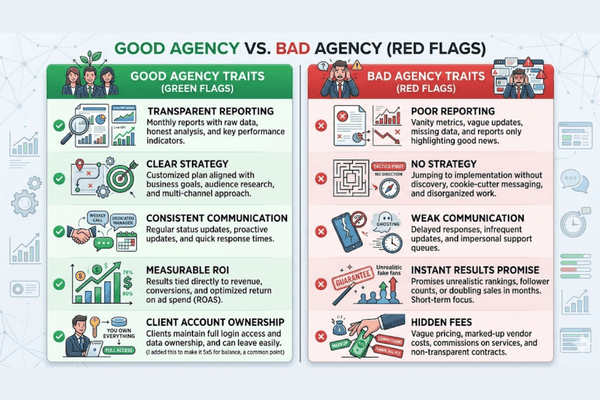
Red flags that indicate a poor social media management company include unrealistic promises, lack of strategy, and transparency issues that may signal poor service quality or ineffective strategies.
The risk signals are listed below.
Instant results promises often indicate an inability to deliver sustainable, long-term social media growth.
Weak strategy means the company may lack a structured approach to achieving measurable results and reaching your goals.
Transparency issues reflect a company that may be hiding poor performance, inflated metrics, or inefficient practices.
No clear reporting can signal that the company is not tracking meaningful metrics or doesn't provide measurable progress.
Unclear communication is a sign of poor customer service, where you may struggle to get updates or meaningful insights.
Why Is Promising Instant Results a Warning Sign in a Social Media Management Company?
Promising instant results is a warning sign because it indicates unrealistic expectations and a lack of understanding of the complexities of building a successful social media strategy.
The reasons instant results are a warning sign are listed below.
Unrealistic promises often mean the company is offering quick fixes that can't deliver sustainable growth or engagement.
False claims can damage your reputation, especially if results don't match the promises made by the company.
Performance expectations should be aligned with industry standards and data-driven strategies, not overly ambitious or inflated figures.
Long-term growth requires consistent, strategic efforts, and quick results usually come at the cost of quality.
Bad agency practices may resort to manipulative tactics like buying followers or engagement, which can harm your brand.
How Does Lack of Strategy Reveal an Unreliable Social Media Management Company?
A lack of strategy reveals an unreliable social media management company because it shows that the company is reactive rather than proactive and may lack long-term vision or a structured plan.
The reasons lack of strategy is a warning sign are listed below.
Weak planning indicates that the company doesn't have a clear roadmap for achieving your business goals.
Random posting without a cohesive plan leads to disjointed messaging and poor brand consistency.
Poor execution results when there's no strategy to guide content creation, engagement, and campaign management.
Strategy gap reflects that the company may not fully understand your brand, audience, or industry, leading to ineffective content.
Missed opportunities happen when the company doesn't have a targeted approach, failing to leverage trends or audience behavior effectively.
What Transparency Issues Should You Watch For in a Social Media Management Company?
Transparency issues to watch for in a social media management company include hidden fees, unclear reporting, and lack of communication, all of which can erode trust.
The transparency issues to watch for are listed below.
Hidden fees are a warning sign that the company may not be upfront about the full cost of services.
Unclear reporting makes it difficult to track progress or assess the effectiveness of your social media campaigns.
Communication gaps lead to frustration, missed updates, and a lack of accountability in project management.
Data access issues indicate that you may not have full visibility into the performance of your campaigns.
Trust problems arise when the company is not forthcoming with updates or honest about challenges and results.
How Should You Compare Freelancers vs Agencies for Social Media Management?
When comparing freelancers vs agencies for social media management, consider cost, scalability, and long-term growth support to determine the best fit for your needs.
The comparison between freelancers and agencies includes:
Freelancers often offer more affordable pricing and flexibility but may lack the resources to scale with growing businesses.
Agencies provide a broader range of services and expertise but may be more expensive and less personalized than freelancers.
Cost comparison is important as freelancers are typically more budget-friendly for small businesses, while agencies may require larger investments.
Scalability is a major factor, as agencies are better equipped to handle larger, more complex projects that need diverse skill sets.
Long-term growth support is a significant advantage of agencies, which can offer comprehensive strategies and a team of specialists.
What Are the Cost Differences When Choosing a Social Media Management Company vs Freelancer?
The cost differences between a social media management company and a freelancer include pricing structures, service offerings, and value for money, with freelancers typically offering lower prices and more flexible terms.
The cost differences are listed below.
Freelancers usually charge lower rates, with flexibility in pricing and shorter commitment periods.
Agencies tend to have higher prices due to the more extensive team and resources they provide.
Pricing structures vary; agencies may offer bundled packages, while freelancers typically charge on an hourly or per-project basis.
Service offerings in agencies tend to be more comprehensive, offering content creation, strategy, and performance analytics.
Value for money depends on the complexity of the project; agencies are more suitable for larger, long-term strategies, while freelancers suit simpler needs.
How Does Scalability Differ Between Freelancers and Social Media Management Companies?
Scalability differs between freelancers and social media management companies because freelancers are typically limited to their individual capacity, while agencies can scale up resources to meet business growth.
The scalability differences are listed below.
Freelancers may struggle to keep up with increased workload or handle multiple accounts simultaneously.
Agencies can bring in additional team members to handle growing needs or manage larger campaigns.
Team support in agencies allows for specialization in areas like content creation, paid media, and analytics.
Growth management is more efficient with agencies, which are built to scale with businesses as they expand.
Workload distribution in agencies helps prevent burnout and ensures higher-quality results with access to varied expertise.
Which Option Better Supports Long-Term Growth?
The option that better supports long-term growth is social media management agencies, which offer the resources, strategic planning, and scalability to handle evolving needs over time.
The long-term growth factors are listed below.
Business support is stronger with agencies, which have more staff and resources to handle increasing demands.
Scalable service in agencies provides flexibility to adapt as your business grows and requires more complex social media strategies.
Freelancers may be suitable for short-term needs but lack the infrastructure to support sustainable long-term growth.
Expansion readiness is built into agency models, ensuring that marketing strategies evolve with your business.
Expertise in agencies enables more effective handling of new challenges and opportunities as your business scales.
When Should You Avoid Hiring a Social Media Management Company?
You should avoid hiring a social media management company when your goals are unclear, budget is limited, or DIY social media management better fits your needs at a certain stage.
The cautionary decision factors are listed below.
Unclear goals make it difficult to define the social media strategy or measure success.
Limited budget may not support the full scope of services offered by a management company, especially for small businesses.
DIY social media can be effective if your needs are simple and your team has the time and expertise to manage it in-house.
Timing is crucial; hiring a company too early without proper strategy or growth can lead to unnecessary expenses.
Decision making should be based on clear goals and a realistic understanding of what you need from social media management.
Should You Delay Hiring a Social Media Management Company If Your Goals Are Unclear?
You should delay hiring a social media management company if your goals are unclear because undefined objectives make it difficult to create a targeted strategy and achieve meaningful results.
The reasons to delay hiring when goals are unclear are listed below.
Goal setting is essential before hiring to ensure the right social media strategy is aligned with business objectives.
Strategy fit is compromised if goals are not defined, making it difficult to measure success or optimize efforts.
Business priorities need to be established to ensure that social media efforts contribute to overall growth and ROI.
Planning a clear strategy upfront allows you to better communicate your vision to the social media management company.
Clear objectives help establish KPIs and metrics to evaluate campaign performance and long-term success.
Should You Reconsider a Social Media Management Company If Your Budget Is Limited?
You should reconsider hiring a social media management company if your budget is limited because cost constraints may prevent you from accessing the services necessary for effective social media marketing.
The reasons to reconsider hiring when budget is limited are listed below.
Service fit may be compromised if your budget doesn’t allow for full-service management, including content creation and strategy.
Cost constraints may force you to choose lower-tier services or fewer platforms, limiting potential results.
Affordability could impact the quality of service provided, as companies may cut corners to meet budget demands.
Budget planning should ensure that you're investing in the right areas, such as strategic content and performance tracking, to drive meaningful results.
Investment in a social media management company should align with your business's revenue and growth expectations.
When Is DIY Social Media Better Than Hiring a Social Media Management Company?
DIY social media is better than hiring a social media management company when you have a small budget, simple needs, and prefer more control over your social media activities.
The situations where DIY social media is better are listed below.
Small budget makes it difficult to afford a full-service agency, and DIY allows you to manage costs effectively.
Simple needs like occasional posts or small campaigns can be easily handled in-house without expert help.
Control over the process allows you to make immediate decisions, tailor content to your exact preferences, and stay agile.
Business stage can influence this decision; startups or small businesses may not yet need a full-fledged social media management service.
Time commitment and availability of resources allow for successful DIY management if you have the bandwidth to dedicate to social media.
Choosing the right social media management company is key to achieving business growth and boosting brand visibility. A reliable partner helps drive engagement, lead generation, and conversions through targeted strategies and content. Evaluating factors like industry experience, budget alignment, and communication practices ensures a good fit for long-term success.
Transparency, scalability, and specialized strategies from reputable agencies can improve performance tracking and ROI. However, beware of red flags like unrealistic promises and lack of transparency, which can waste resources. By selecting the right partner, businesses can build a strong social media presence that supports sustained growth.