
What's Included in Instagram Management Services for Small Businesses?
What is Instagram management for small businesses?
Instagram management for small businesses is the process of planning, creating, publishing, and optimizing content to grow a brand’s presence on the platform. It ensures a well-managed Instagram profile that drives real results, combining strategy, content creation, and analytics to support sustainable growth.
It blends social media management with platform-specific tactics to build a consistent professional presence. For small business social profiles, it improves visibility, engagement rates, and conversions using a data-led strategy aligned with platform best practices. Industry benchmarks from Meta Business resources show that consistent posting and analytics tracking directly improve reach and engagement performance [site: Meta Business Help Center].
At an operational level, Instagram management services include several tightly connected tasks:
Creating scroll-stopping content using graphics, reels, and short-form video aligned with Instagram's algorithm
Scheduling posts to maintain a consistently active profile using tools like Hootsuite or Buffer
Writing compelling captions tailored to audience intent and brand voice
Executing hashtag strategy and discovery to reach new audiences without paid ads
Managing engagement and community building through comments, messages, and user-generated content
Tracking performance metrics such as reach, impressions, saves, and follower growth using Instagram Insights
A managed Instagram profile ensures every task supports one goal: to generate leads directly or drive traffic to a business website. In practice, social media experts combine human expertise with analytics to refine content performance, identify untapped opportunities, and maintain long-term Instagram growth for service-based businesses.
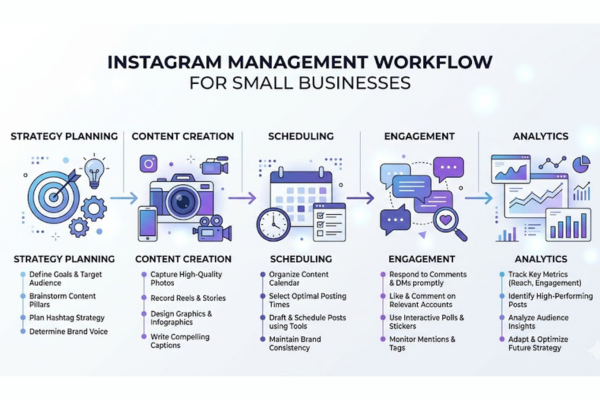
What does Instagram management include for a small business?
Instagram management includes planning, creating, posting, tracking, and improving content for a small business account. It covers strategy, content, engagement, and reporting so the account supports brand trust, reach, and leads.
A small business needs Instagram management because the platform works as a public storefront. Customers check posts, Reels, Stories, reviews, comments, and profile details before they message or buy. Meta owns Instagram, so account setup and ad tools connect through Meta Business Suite [site: Meta Business Help Center 2026].
Instagram management includes these core tasks:
Creating a monthly content plan
Writing captions with clear calls to action
Designing feed posts, Reels, and Stories
Scheduling posts at strong audience times
Replying to comments and direct messages
Tracking reach, saves, clicks, and profile visits
Testing content topics, hooks, and formats
A KPI means key performance indicator. It is a number that shows if marketing works.
For a small business, useful Instagram KPIs include profile visits, website clicks, message starts, follower growth, saves, and reach. Reach means the number of accounts that see the content. Saves show that people found the post useful.
Example: A local med spa can post treatment tips, before-and-after photos, client education Reels, and booking reminders. The manager tracks which posts bring profile visits and direct messages.
Instagram management does not mean posting random graphics. It means using each post to support one business goal, such as awareness, trust, traffic, bookings, or sales.
How does Instagram management help small businesses grow their online presence?
Instagram management helps small businesses grow their online presence by executing consistent content creation and strategic engagement aligned with platform algorithms. It builds a consistent professional presence that increases visibility and reach, ensuring the brand appears in followers' feeds every single day while attracting new audiences through optimized content and interaction.
A well-managed Instagram profile uses content optimization, hashtag strategy, and engagement to improve reach and increase followers. Instagram’s algorithm favours video content and active profiles, which expands visibility beyond existing followers [site: Meta Engineering Blog]. This produces measurable growth in impressions, engagement rates, and website traffic.
Consistent posting combined with engagement & community building strengthens brand growth. Social media experts create scroll-stopping content, respond to comments, and build real relationships that make the audience feel valued. This process turns casual browsers into loyal followers and increases conversion opportunities over time.
Data-driven decisions play a central role. Using Instagram Insights, businesses track reach, engagement rate, and follower growth to understand what’s working. A field-tested approach shows that profiles posting 3–5 times weekly with active engagement achieve faster, sustainable Instagram growth than inactive accounts.
What tasks are included in Instagram management services?
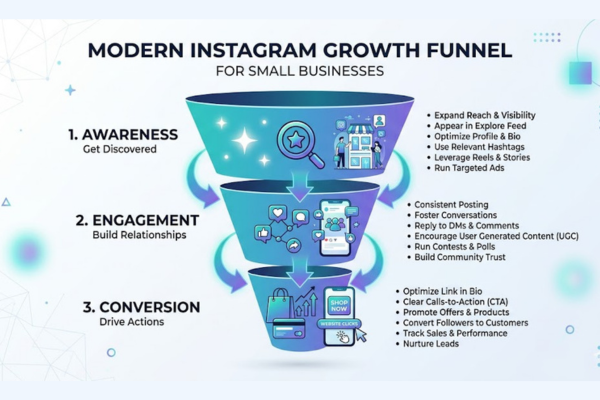
Instagram management services include the execution of content creation, scheduling, engagement, analytics, and community management for business social media growth. They deliver a complete system that manages content, engagement, and performance tracking, ensuring every activity supports visibility, audience growth, and conversion outcomes.
Tasks included in Instagram management services are listed below.
Creating high-quality content, including graphics, reels, and short-form video, aligned with brand identity
Scheduling posts using professional scheduling tools like Later to maintain a consistent posting schedule
Writing compelling captions tailored to audience intent and platform best practice
Managing engagement through replies, comments, and direct messages to build genuine relationships
Executing hashtag strategy & discovery using industry-specific and location-specific hashtags
Tracking analytics & growth using Instagram Insights to measure reach, engagement rates, and follower growth
Each task supports one goal: drive real results through a consistently active profile. Industry guidance from Meta Business documentation confirms that structured content calendars and engagement tracking improve performance outcomes across Instagram business accounts [site: Meta Business Help Center].
How is Instagram management different from posting content manually?
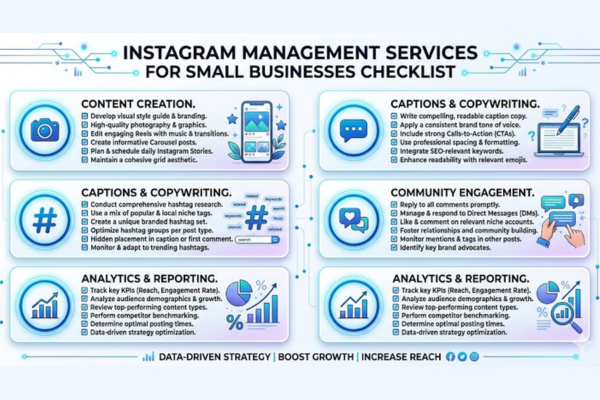
Instagram management differs from manual posting by delivering structured, optimized, and consistent execution, while manual posting relies on irregular effort and limited strategy. It provides higher efficiency through automation and data-driven optimization, ensuring content reaches the right audience at the right time with measurable performance tracking.
Manual posting consumes time and lacks consistency. Business owners often miss optimal posting windows and fail to track engagement metrics like saves, shares, and reach impressions. In contrast, Instagram management services use scheduling tools and analytics to maintain a consistently active profile.
Optimization is the key difference. Managed services apply content optimization, hashtag strategy, and performance tracking; every task supports one goal. This increases reach, engagement rate, and follower growth compared to unstructured posting.
Time efficiency creates a direct advantage. Social media experts handle content calendars, engagement, and analytics, allowing businesses to focus on operations. A structured workflow using tools like Sprout Social ensures consistent professional content and long-term Instagram growth backed by measurable data [site: Sprout Social Index Report].
Why is Instagram management important for small businesses?
Instagram management is important for small businesses because it ensures consistent brand presence, active customer engagement, and scalable business growth. It delivers a consistent professional presence that drives engagement and sales, helping brands stay visible, build trust, and convert followers into paying customers through structured social media strategy.
A well managed Instagram profile maintains brand consistency across visuals, captions, and messaging. This consistency increases recognition and recall, especially when content appears in followers feeds every single day. According to Meta Business guidance, consistent posting and engagement directly improve conversion opportunities and audience retention [site: Meta Business Help Center].
Customer engagement becomes measurable and repeatable. Businesses respond to comments, share user generated content, and build real relationships that make the audience feel valued. A local service provider using consistent Instagram management increased inquiry-driven leads by aligning content with seasonal promotions and tracking engagement signals.
Sales opportunities expand through visibility and trust. A consistently active profile with compelling content and clear calls to action drives traffic to business websites or contact buttons. Social media experts apply data led strategy to ensure each campaign supports one goal: generate leads directly or increase revenue over time.
How does Instagram management increase brand awareness and visibility?
Instagram management increases brand awareness and visibility by maintaining regular posting, optimizing hashtags, and executing consistent engagement aligned with algorithm signals. It creates continuous exposure across feeds, explore pages, and search results, helping brands reach far beyond existing followers through both organic growth and paid promotions.
A structured content calendar ensures a regular posting schedule with diverse high-quality content formats. Instagram’s algorithm favours video content and engagement signals like saves and shares, which increases reach and impressions. In fact, a report from Meta shows video content generates up to 2× higher reach than image posts [site: Meta Engineering Insights]. This process positions content in explore feeds and hashtag search results.
Hashtag strategy & discovery expands reach to new audiences without relying only on followers. Using industry-specific and location-specific hashtags helps attract local customers and niche segments. Paid promotions using Instagram Ads further amplify visibility by targeting demographics, interests, and behaviors with precision.
Engagement plays a direct role in visibility. Profiles that also proactively engage with users through comments and messages achieve higher ranking signals. This increases social media reach and strengthens long-term Instagram growth through consistent professional content.
Why does Instagram management improve engagement and customer trust?
Instagram management improves engagement and customer trust by ensuring consistent interaction, timely responses, and high quality content tailored to audience intent. It builds strong follower relationships through consistent interaction and value delivery, increasing trust signals that influence purchasing decisions and long-term loyalty.
Consistent engagement & community building drives measurable interaction. Responding to comments, replying to messages, and using interactive features like polls and question stickers increases likes, comments, and shares. These actions signal relevance to Instagram’s algorithm and improve engagement rate.
Trust develops through authentic content and visibility. Sharing user-generated content, customer spotlights, and behind-the-scenes footage provides social proof. Real customers showing real results strengthen credibility and reduce hesitation in decision-making.
Performance tracking refines engagement outcomes. Using Instagram Insights, businesses track metrics like reach, engagement rate, and follower growth to understand what’s working. A structured analysis of content performance shows which posts generate meaningful comments rather than passive likes, guiding ongoing optimization [site: Meta Business Analytics Guide].
How does Instagram management help attract and convert new customers?
Instagram management helps attract and convert new customers by combining targeted content, strategic promotions, and conversion-focused messaging. It builds a structured funnel that turns attention into qualified leads, using optimized posts, audience targeting, and clear calls to action that guide users from discovery to purchase.
Targeted growth begins with content aligned to audience intent. Social media experts create scroll-stopping content and use a hashtag strategy to reach new audiences without paid ads. Instagram’s algorithm favours video content, which increases reach impressions and attracts potential customers [site: Meta Engineering Blog].
Conversion strategies turn visibility into action. Businesses use lead generation posts, limited-time offers, and Instagram ads with CTA buttons like “Book Now” or “Contact.” A service-based brand using seasonal promotions and optimized CTAs increased website clicks and inquiries through consistent campaign tracking.
A data-led strategy ensures efficiency. Using Instagram Insights and ad analytics, businesses analyze engagement, track conversions, and refine campaigns. This process reduces wasted spend and improves customer acquisition through measurable performance tracking.
What does Instagram marketing management involve for growing brands?
Instagram marketing management involves planning, creating, posting, testing, and improving Instagram content for a growing brand. It turns Instagram into a growth channel through content, community, ads, and clear reports.
A growing brand needs more than random posts. It needs a clear offer, a steady content plan, and fast audience replies. Instagram connects with Meta Business Suite, which helps brands manage posts, ads, inbox messages, and page activity [site: Meta Business Help Center 2026].
Instagram marketing management involves these parts:
Building a content strategy around offers, products, services, and customer questions
Creating Reels, Stories, carousels, and feed posts for reach, trust, and sales
Writing captions with hooks, clear points, and calls to action
Managing comments and direct messages so followers get fast answers
Testing hashtags, topics, hooks, and formats to find what gets better results
Running Instagram ads through Meta Ads Manager when paid growth is needed
Tracking results like reach, saves, profile visits, website clicks, leads, and sales
A call to action means the next step you ask people to take. Examples include “Book a call,” “Shop now,” “Send a message,” or “Download the guide.”
Example: A growing skincare brand can use Instagram marketing management to post product tips, customer reviews, ingredient education, founder videos, and limited-time offers. The manager checks which posts create saves, website clicks, direct messages, and purchases.
Instagram marketing management also connects content with business goals. Reels can increase reach. Stories can build trust. Carousels can teach buyers. Direct messages can start sales talks.
A growing brand should review Instagram results every week. The manager should check what gained reach, what earned saves, and what created action. This keeps the content plan tied to real growth, not vanity numbers.
Instagram marketing management involves strategy, content, engagement, ads, and reporting for growing brands.
Why is consistent Instagram activity critical for small business growth?
Consistent Instagram activity is critical for small business growth because it maintains visibility, strengthens engagement, and signals relevance to the algorithm. It creates continuous engagement that compounds audience growth over time, ensuring content appears regularly in feeds and keeps the audience engaged daily.
A consistent posting schedule supported by a content calendar improves reach and engagement rates. Instagram’s ranking system prioritizes active profiles that post 3–5 times weekly and maintain interaction signals like comments and saves [site: Meta Creator Guide]. This increases follower growth and visibility.
Regular engagement builds momentum. Responding to comments, updating stories, and sharing new content keeps the audience coming back. A local retail brand that shifted from irregular posting to a structured schedule saw higher engagement and repeat customer interactions within 60–90 days.
Performance tracking validates consistency. Businesses using analytics identify what’s working and optimize future content. This structured approach supports long term Instagram growth and measurable business outcomes.
What does Instagram management include in a managed service?
Instagram management in a managed service includes content creation, engagement handling, analytics tracking, and strategic optimization handled by professionals. It delivers a complete outsourced system for content, engagement, and growth, allowing businesses to maintain a consistent professional presence without managing daily execution internally.
A managed service covers the full lifecycle of business social media. It includes planning content calendars, producing high-quality deliverables, publishing posts, and managing engagement & community building. Tools like Canva and Meta Business Suite support efficient execution and scheduling.
Analytics & growth tracking ensure measurable outcomes. Teams monitor reach, engagement rate, and follower growth while analyzing content performance. This insight shapes ongoing strategy and identifies untapped opportunities for targeted growth.
Outsourcing improves efficiency and results. Social media experts apply platform best practices and data-driven decisions while businesses focus on operations. Industry guidance from Meta Business resources confirms that structured management increases consistency and campaign performance [site: Meta Business Help Center].
What content types are created in Instagram management (posts, reels, stories, carousels)?
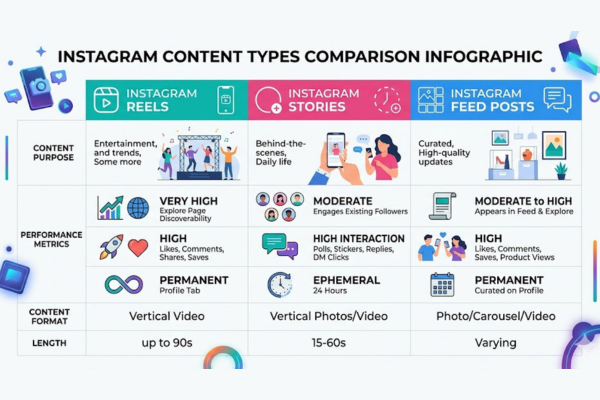
Instagram management creates multiple content types designed to achieve specific marketing goals across awareness, engagement, and conversion. It uses a strategic mix of formats to maximize reach and interaction, ensuring each content type supports visibility, engagement, and follower growth within a cohesive content strategy.
The primary content types include:
Creating posts for brand awareness using high-quality visuals and consistent messaging
Producing reels for engagement and reach, leveraging short-form video content favored by the algorithm
Publishing stories for real-time interaction using polls, question stickers, and behind-the-scenes content
Designing carousels for education and retention, allowing multiple slides to deliver value-driven information
Each format serves a defined role. Reels expand reach far beyond followers, while stories maintain daily interaction. A balanced mix increases engagement rates and strengthens audience relationships over time [site: Meta Creator Playbook].
How are captions, hashtags, and visuals handled in Instagram management?
Captions, hashtags, and visuals are handled in Instagram management through structured content optimization aligned with audience intent and brand identity. It ensures high-performing content through optimized captions, targeted hashtags, and cohesive visuals, improving engagement, discoverability, and consistency across the entire profile.
Captions are written using compelling messaging tailored to audience behavior. Social media experts use tools like Jasper AI for ideation and refine tone manually to match the brand voice. Clear CTAs and concise storytelling increase interaction and conversions.
Hashtag strategy & discovery uses data-driven research. Tools like Flick help create custom sets based on content types and competition levels. This approach balances high-volume hashtags with niche tags to drive traffic and reach new audiences.
Visuals maintain a cohesive visual identity. Designers use consistent colors, fonts, and layouts to ensure a visually stunning, consistently active profile. This consistency builds recognition and trust while supporting long-term Instagram growth through professional presentation.
What posting frequency and scheduling are included in Instagram management?
Instagram management determines posting frequency and scheduling by analyzing audience behavior, content performance, and platform signals. It establishes a data-driven posting schedule that maximizes engagement and reach, ensuring content appears consistently without overwhelming followers or reducing visibility.
Posting frequency typically ranges from 3–7 posts per week, depending on industry, audience activity, and content type mix. Instagram’s algorithm rewards consistency and active profiles, which increases reach and engagement rates when posting remains steady [site: Meta Creator Guide]. Stories and reels are often published daily to maintain visibility.
Scheduling tools ensure execution without gaps. Platforms like Later and Buffer automate publishing based on optimal engagement windows. This structured approach maintains a consistently active profile and supports long-term Instagram growth.
A content calendar aligns posting with campaigns and promotions. Social media experts adjust frequency using performance tracking. Every task supports one goal: improve engagement and drive real results.
How is engagement and community management handled in Instagram management?
Instagram management handles engagement and community management by actively interacting with followers, moderating conversations, and building relationships through consistent communication. It creates a responsive system that strengthens relationships and boosts engagement signals, ensuring audiences feel valued and remain actively connected to the brand.
Engagement includes responding to comments, replying to direct messages, and initiating conversations through stories and interactive features. These actions increase likes, comments, and shares, which improve reach, engagement rate, and follower growth. Instagram prioritizes profiles with consistent interaction signals [site: Meta Engagement Signals Overview].
Community management focuses on relationship building. Social media experts share user-generated content, acknowledge customer feedback, and collaborate with local influencers and complementary businesses. This builds social proof and encourages repeat interaction.
Tools streamline execution and tracking. Platforms like Sprout Social centralize messages and comments for faster responses. This ensures no interaction is missed and supports meaningful comments rather than passive engagement.
What analytics and reporting are included in Instagram management services?
Instagram management services include analytics and reporting that track performance metrics and guide data-driven decisions. They deliver clear performance insights that shape ongoing strategy, enabling businesses to measure growth, identify trends, and optimize content based on measurable outcomes.
Core analytics include reach, impressions, engagement rate, follower growth, saves, shares, and website clicks. These metrics come from Instagram Insights and third-party tools, providing a complete view of content performance. Meta Business resources confirm that tracking these metrics improves campaign effectiveness [site: Meta Business Analytics Guide].
Reporting translates data into actionable insights. Monthly or weekly reports highlight what’s working, which content performed best, and where improvements are needed. A clear report focused on engagement rates and reach helps refine future campaigns.
Data-driven decisions improve results over time. Businesses analyze engagement, track conversions, and adjust strategy based on audience behavior. This process supports sustainable Instagram growth and consistent performance improvement.
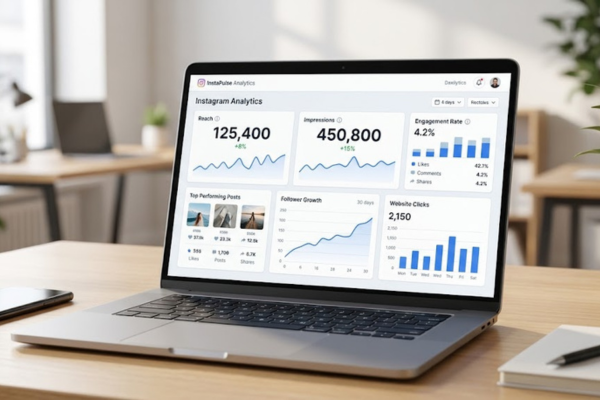
How does Instagram management work step by step for businesses?
Instagram management works step by step by moving from onboarding and strategy development to content execution, scheduling, and continuous optimization. It follows a structured workflow that ensures consistent growth and measurable results, guiding businesses through each phase with clear actions and performance tracking at every stage.
The process begins with onboarding and account audits to define business goals and evaluate current performance. It then moves into content strategy and calendar planning based on audience targeting and brand positioning. These steps ensure alignment between business objectives and content execution.
Next comes content creation and scheduling using professional tools, followed by engagement and community management to maintain interaction. Analytics and reporting close the loop by measuring reach, engagement, and conversions. This insight shapes ongoing strategy and ensures long term Instagram growth through continuous refinement [site: Meta Business Process Guide].
How does Instagram management begin with onboarding and account audits?
Instagram management begins with onboarding and account audits by analyzing business goals, audience, and current account performance. It establishes a clear baseline that identifies strengths, gaps, and growth opportunities, ensuring the strategy aligns with measurable objectives and platform best practices from the start.
Onboarding defines objectives such as lead generation, brand awareness, or sales growth. Social media experts gather details about the target audience, competitors, and brand positioning. This ensures every task supports one goal and aligns with business needs.
Account audits assess the existing profile. Managers review content quality, posting frequency, engagement rates, and hashtag performance. They also analyze competitors' Instagram activity to identify untapped opportunities and benchmark performance.
This initial analysis drives strategy development. Using Instagram Insights and performance data, teams create a roadmap that improves weak areas and scales what’s already working. This structured start reduces inefficiencies and accelerates growth.
How are content strategies and calendars developed in Instagram management?
Content strategies and calendars are developed in Instagram management by aligning business goals, audience insights, and brand identity into a structured publishing plan. It creates a targeted content system that ensures consistency and audience relevance, guiding what to post, when to post, and how to engage effectively.
Strategy development begins with audience targeting and content planning. Social media experts identify content themes such as educational tutorials, customer spotlights, and behind-the-scenes footage. This ensures diverse, high-quality content that provides real value.
A content calendar organizes execution. Managers plan posts weekly or monthly, aligning with campaigns, launches, and seasonal promotions. Tools like Trello or Notion help structure timelines and maintain consistency.
Performance data refines the calendar. Teams track what’s working using analytics and adjust future posts accordingly. This insight shapes ongoing strategy and supports consistent professional content that drives engagement and growth.
How is content designed, written, and approved in Instagram management?
Content is designed, written, and approved in Instagram management through a structured workflow aligning visuals, messaging, and brand identity. It ensures a cohesive content system aligned with brand messaging, where design, copywriting, and review stages work together to maintain consistency and accuracy before publishing.
Design begins with visual branding. Content creators use tools like Canva or Adobe Photoshop to create high quality visuals with consistent colors, fonts, and layouts. This builds a cohesive visual identity across posts, reels, and stories.
Copywriting follows a strategic approach. Teams write compelling captions tailored to audience intent, using clear messaging and calls to action. This ensures every post supports engagement and conversion goals.
Approval finalizes quality control. Draft content is shared with business owners for review, feedback, and revisions. A final check ensures accuracy, brand alignment, and campaign consistency before scheduling, reducing errors and maintaining professional standards.
How is content scheduled and published in Instagram management?
Content is scheduled and published in Instagram management by aligning posting times, audience activity, and algorithm signals using automation tools. It delivers optimized publishing at peak engagement times, ensuring posts reach the highest number of users while maintaining a consistent posting schedule.
Scheduling begins with a content calendar that maps posts to specific dates and campaigns. Social media experts identify peak activity windows using Instagram Insights data. This timing improves reach, impressions, and engagement rates [site: Meta Creator Guide].
Publishing uses tools like Meta Business Suite and Hootsuite to automate posting. These tools ensure accuracy, consistency, and reduce manual errors during execution.
The process includes uploading content, adding captions, inserting hashtags, and previewing layout before publishing. This structured workflow ensures every post goes live correctly and supports engagement optimization.
How is performance tracked and optimized in Instagram management?
Performance is tracked and optimized in Instagram management by analyzing key metrics and refining content based on data insights. It creates a continuous improvement loop driven by analytics, where every post is measured, evaluated, and adjusted to improve reach, engagement, and conversions.
Tracking focuses on metrics like reach, impressions, engagement rate, follower growth, and website clicks. These insights come from Instagram Insights and external tools, providing a full performance overview. Meta Business documentation confirms these metrics directly impact campaign success [site: Meta Business Analytics Guide].
Optimization follows data analysis. Teams identify what’s working by reviewing content performance analysis and engagement patterns. High-performing formats like reels or carousels are scaled, while underperforming content is adjusted.
Data driven decisions refine strategy over time. Businesses analyze engagement, track conversions, and update content calendars accordingly. This ensures sustainable Instagram growth and improved performance tracking every task supports one goal.
What content strategies are used in Instagram management?
Instagram management uses content strategies focused on visual consistency, storytelling, and engagement tactics to drive growth. It builds a balanced strategy combining organic content and paid promotions, ensuring brands maintain visibility, connect emotionally with audiences, and convert attention into measurable business results.
Visual consistency ensures recognition. Brands use cohesive colors, fonts, and layouts across all content types. This strengthens brand identity and improves recall when users see posts repeatedly in their feeds.
Storytelling drives engagement. Content includes customer stories, behind the scenes footage, and educational posts that provide real value. This approach builds meaningful relationships and keeps the audience engaged daily.
Organic posts and paid promotions work together. Organic content builds trust and engagement, while Instagram ads expand reach and target specific audiences. This combination increases visibility and supports scalable growth [site: Meta Advertising Guide].
How do reels, stories, and feed posts perform within Instagram management?
Reels, stories, and feed posts perform within Instagram management by serving distinct roles in reach, engagement, and branding. They create a multi-format strategy that maximizes audience interaction and visibility, ensuring each content type contributes to overall performance and growth.
Reels drive discovery and reach. Instagram’s algorithm favours video content, pushing reels to explore pages and new audiences. They generate higher reach and impressions compared to static posts [site: Meta Creator Playbook].
Stories maintain daily engagement. They appear at the top of feeds and include interactive features like polls and questions. This increases direct interaction and keeps the audience engaged consistently.
Feed posts build brand presence. High quality images and carousels strengthen visual identity and deliver value-driven content. They support long term engagement and improve metrics like saves and shares.
How does visual branding influence Instagram management success?
Visual branding influences Instagram management success by creating a consistent and recognizable identity across all content. It establishes a strong visual identity that increases trust and engagement, ensuring audiences instantly recognize the brand and associate it with quality and reliability.
Consistent colors, fonts, and imagery create cohesion. This consistency makes the profile visually stunning and professionally aligned. Users are more likely to engage with content that looks organized and appealing.
Brand identity impacts perception. A well designed profile signals credibility and authority, which increases trust and conversion rates. Research from design-focused studies shows consistent branding improves recognition and recall [site: Harvard Business Review].
Visual consistency also supports engagement. Posts that align with a cohesive style perform better in terms of likes, saves, and shares. This strengthens long term Instagram growth and audience loyalty.
How does user-generated content support Instagram management growth?
User-generated content supports Instagram management growth by leveraging real customer experiences to build authenticity and trust. It creates authentic social proof that strengthens engagement and loyalty, encouraging more users to interact with the brand and share their own experiences.
UGC includes photos, reviews, and testimonials shared by customers. Featuring real customers using products builds credibility and reduces purchase hesitation. This content performs strongly because it feels genuine and relatable.
Community involvement increases engagement. Encouraging customers to share content and tag the brand creates a feedback loop of interaction. This builds meaningful relationships and expands reach organically.
UGC also improves brand loyalty. Customers feel valued when their content is featured, increasing repeat engagement. A structured UGC strategy supports sustainable Instagram growth and strengthens community building.
Who manages Instagram accounts in a managed service?
Instagram accounts in a managed service are handled by a team of social media managers, content creators, and strategists working collaboratively. They deliver a coordinated team approach that ensures consistent growth and performance, combining creative execution, strategic planning, and data analysis to manage the account effectively.
Social media managers oversee daily operations, including posting, engagement, and performance tracking. Content creators design visuals and produce high-quality content aligned with brand identity. Strategists develop data-led strategies and optimize campaigns based on analytics.
This collaborative structure ensures every task supports one goal. Teams use tools like Asana to manage workflows and maintain consistency. Industry practices show that structured team roles improve efficiency and campaign results [site: Social Media Examiner Report].
What roles do social media managers, designers, and strategists play in Instagram management?
Social media managers, designers, and strategists play distinct roles that combine to execute effective Instagram management. They form a specialized workflow where each role drives a specific function, ensuring content quality, strategic alignment, and measurable performance across all activities.
Social media managers handle publishing, engagement, and community management. They respond to followers, track metrics, and maintain daily activity. This ensures consistent interaction and relationship building.
Designers focus on visual creation. They produce graphics, reels, and branded assets using tools like Adobe Illustrator. Their work ensures cohesive visual identity and high quality deliverables.
Strategists guide direction. They analyze performance data, define content strategy, and optimize campaigns. This ensures data driven decisions and continuous improvement in reach, engagement, and conversions.
How do teams collaborate in Instagram management workflows?
Teams collaborate in Instagram management workflows by using structured processes, shared tools, and clear role coordination. It creates a streamlined workflow that ensures efficiency and consistency, allowing different specialists to work together without delays or misalignment.
Collaboration uses project management tools like Trello and communication platforms such as Slack. These tools centralize tasks, feedback, and approvals, reducing errors and improving speed.
Roles overlap strategically. Designers, managers, and strategists review content together, ensuring alignment with brand and goals. This cross-functional approach improves quality and performance outcomes.
Workflow optimization ensures smooth execution. Content moves from planning to design, approval, scheduling, and analysis without gaps. This structured system supports consistent professional content and long-term Instagram growth.
What responsibilities remain with the business owner in Instagram management?
Business owner responsibilities in Instagram management include providing brand direction, approving content, and aligning strategy with business goals. They retain final control over brand messaging and strategic direction, ensuring all content reflects business values, services, and market positioning accurately.
Owners supply brand guidelines, including tone of voice, visual style, and service details. This input ensures content creation aligns with real business identity. Without this, even high-quality content fails to convert effectively.
Content approval remains critical. Business owners review drafts, suggest revisions, and approve final posts before publishing. This step ensures accuracy, compliance, and alignment with ongoing promotions or operational changes.
Collaboration drives results. Regular communication with social media managers ensures campaigns match business priorities. A structured feedback loop reduces delays and improves content performance through shared accountability.
How does Instagram management measure performance and results?
Instagram management measures performance and results by tracking key performance indicators (KPIs) across engagement, reach, and conversions. It delivers a measurable framework that links content activity to business outcomes, ensuring every action is evaluated using data and refined to improve growth and return on investment.
Performance measurement focuses on engagement metrics like likes, comments, saves, and shares. These signals indicate content relevance and audience interaction. Instagram Insights provides real-time data that reflects how users respond to posts [site: Meta Business Analytics Guide].
Follower growth and reach measure visibility. Tracking impressions, reach, and audience growth shows how content expands beyond existing followers. This helps identify whether strategies attract new audiences or retain current ones.
Conversion metrics connect social media to revenue. Businesses track website clicks, leads, and inquiries generated from Instagram. Tools like Google Analytics link traffic and conversions to specific campaigns.
Data-driven reporting ensures clarity. Regular reports analyze performance trends, highlight top content, and guide optimization. This structured approach ensures consistent improvement and supports long-term Instagram growth.
Which metrics are tracked in Instagram management (engagement, reach, followers)?
Instagram management tracks metrics such as engagement, reach, and follower growth to evaluate content performance and audience behavior. It focuses on key performance indicators that reveal content effectiveness and growth trends, helping businesses refine strategies based on measurable insights.
Core metrics include:
Tracking engagement through likes, comments, saves, and shares to measure audience interaction
Measuring reach to understand how many unique users view content across posts and reels
Monitoring impressions to track total content views, including repeat exposure
Analyzing follower growth to assess audience expansion and retention patterns
Evaluating website clicks and conversions to connect Instagram activity with business outcomes
Each metric provides a specific insight. Engagement shows content quality, reach indicates visibility, and follower growth reflects long term interest. Combined analysis helps businesses understand what’s working and adjust content accordingly.
Meta Business documentation confirms that combining these metrics improves campaign performance and targeting accuracy [site: Meta Business Help Center].
How does Instagram management use data to improve performance?
Instagram management uses data to improve performance by analyzing insights, identifying trends, and refining content strategy based on measurable results. It creates a feedback loop where data continuously improves content effectiveness, ensuring strategies evolve with audience behavior and platform changes.
Data analysis begins with Instagram Insights. Teams review engagement, reach, and follower growth to identify high-performing content. This reveals which formats, captions, and posting times produce the best results.
Optimization follows clear patterns. Social media experts adjust posting schedules, refine hashtag strategy, and prioritize content types like reels or carousels. This increases reach engagement rate and improves overall performance.
Tools enhance analysis. Platforms like Sprout Social and Hootsuite Analytics generate detailed reports. These insights guide data driven decisions and ensure continuous improvement.
How often should Instagram management strategies be reviewed?
Instagram management strategies should be reviewed regularly based on performance data, audience behavior, and platform trends. It requires scheduled reviews that keep strategy aligned with changing performance signals, ensuring content remains effective and supports business goals over time.
Weekly reviews focus on short-term metrics. Teams analyze engagement rates, reach, and recent post performance to identify immediate improvements. This helps adjust content quickly and maintain momentum.
Monthly reviews evaluate broader trends. Businesses assess follower growth, campaign performance, and conversion data. This level of analysis identifies patterns and supports strategic adjustments.
Quarterly reviews refine long-term direction. Teams align Instagram strategy with business goals, seasonal campaigns, and market shifts. Industry best practices recommend structured reviews to maintain consistent growth and avoid stagnation [site: Social Media Examiner].
How does Instagram management support long-term business growth?
Instagram management supports long-term business growth by building a sustainable content system, an engaged audience, and a consistent brand presence. It creates a scalable growth engine driven by consistency and engagement, allowing businesses to expand visibility, strengthen relationships, and generate ongoing revenue over time.
Sustainable strategy ensures stability. A structured content calendar and consistent posting maintain visibility and engagement. This prevents performance drops and supports continuous audience growth.
Community building strengthens loyalty. Engaged followers become repeat customers and brand advocates. Sharing user-generated content and interacting consistently builds trust and long-term relationships.
Consistency drives compounding results. Businesses that maintain regular activity and optimize performance see gradual increases in reach, engagement, and conversions. Case-based observations show that consistent profiles outperform inactive ones within 90–180 days.
How does Instagram management build consistency across content and messaging?
Instagram management builds consistency across content and messaging by enforcing style guidelines, tone of voice, and structured content planning. It ensures a unified brand presence across all content formats, making every post, story, and reel align with business identity and objectives.
Style guides define visual elements. Consistent colors, fonts, and layouts create a cohesive visual identity. This improves recognition and ensures content appears professionally aligned.
Tone of voice standardizes messaging. Captions follow a defined communication style that reflects brand personality. This consistency strengthens trust and audience connection.
Content planning maintains alignment. A content calendar ensures messaging supports campaigns and business goals. This structured approach eliminates inconsistencies and improves overall performance.
Why does Instagram management strengthen the overall marketing strategy?
Instagram management strengthens overall marketing strategy by aligning content, messaging, and campaigns with broader business goals. It creates a connected system that integrates social media with overall digital marketing efforts, ensuring consistency across channels and maximizing campaign impact.
Cross-channel marketing improves reach. Instagram content supports email marketing, websites, and paid advertising campaigns. This integration ensures consistent messaging across all platforms.
Content integration enhances efficiency. Repurposing content across channels reduces production time while maintaining brand alignment. This approach increases visibility without additional resource strain.
Strategic alignment improves results. Instagram campaigns support product launches, promotions, and brand awareness efforts. This ensures every marketing activity contributes to measurable business growth.
How does Instagram management scale as a business grows?
Instagram management scales as a business grows by expanding content production, refining targeting, and increasing resource allocation. It builds a flexible system that adapts to higher content demand and audience size, ensuring growth does not compromise quality or consistency.
Content scalability increases output. Businesses move from basic posts to advanced formats like reels, campaigns, and collaborations. This supports larger audiences and broader reach.
Audience targeting becomes more precise. Data analysis allows segmentation based on behavior, location, and interests. This improves engagement and conversion rates.
Tools and teams expand capacity. Platforms like Asana and Notion support workflow management, while teams grow to handle increased demand. This ensures consistent professional content at scale.
How are costs, tools, and expectations related to Instagram management evaluated?
Costs, tools, and expectations in Instagram management are evaluated by analyzing pricing models, service scope, and return on investment. It provides a structured evaluation framework balancing cost with measurable results, helping businesses choose services that align with goals, budget, and growth expectations.
Pricing models vary based on service level. Monthly retainers typically range from $300 to $3,000 depending on content volume, engagement scope, and campaign complexity. Higher costs reflect advanced strategy, analytics, and content production.
Tools support execution and efficiency. Platforms like Canva, Hootsuite, and Google Analytics enable content creation, scheduling, and performance tracking. These tools directly impact productivity and results.
Cost-benefit analysis determines value. Businesses compare investment against metrics like engagement growth, lead generation, and revenue impact. Industry guidance shows that structured social media management produces higher ROI when aligned with clear objectives [site: HubSpot Marketing Report].
Expectation management ensures clarity. Defined deliverables, reporting frequency, and communication standards prevent misunderstandings. This structured approach ensures both parties align on outcomes and performance benchmarks.
How are pricing models structured for Instagram management services?
Pricing models for Instagram management services are structured around retainers, per-post fees, and bundled monthly packages. They provide flexible pricing structures based on scope and deliverables, allowing businesses to choose models aligned with content volume, engagement needs, and strategic complexity.
Retainer models charge a fixed monthly fee, typically $500–$3,000, covering full-service management. This ensures consistency and long-term strategy but requires higher upfront commitment. It suits businesses seeking sustainable Instagram growth.
Per-post pricing charges $20–$150 per post, depending on design quality and complexity. This offers flexibility but lacks strategic continuity. Businesses often miss engagement and analytics support under this model.
Monthly packages combine services like content creation, scheduling, and analytics into tiered plans. These balance cost and value, offering predictable service scope. Industry pricing benchmarks from marketing reports show bundled services deliver higher ROI than fragmented execution [site: HubSpot Pricing Study].
Which tools support workflows in Instagram management?
Instagram management workflows are supported by scheduling tools, analytics platforms, and design software that streamline execution. They create an integrated tool stack that improves efficiency and performance, ensuring content planning, publishing, and tracking operate seamlessly across all stages.
Scheduling tools automate publishing. Platforms like Hootsuite and Later manage posting schedules and maintain consistency. This reduces manual workload and ensures optimal timing.
Analytics platforms track performance. Tools such as Sprout Social provide detailed insights into engagement, reach, and follower growth. These insights guide data driven decisions and content optimization.
Design software supports content creation. Platforms like Canva and Adobe tools enable high quality visuals aligned with brand identity. This ensures visually consistent and engaging content across all formats.
How do businesses evaluate ROI from Instagram management services?
Businesses evaluate ROI from Instagram management services by analyzing engagement, follower growth, and conversion metrics linked to revenue outcomes. It delivers a measurable return based on engagement, traffic, and conversions, connecting content performance directly to business results and financial impact.
ROI evaluation begins with engagement rates. Metrics like likes, comments, saves, and shares indicate content effectiveness and audience interest. Higher engagement correlates with stronger visibility and brand interaction.
Follower growth measures audience expansion. Consistent growth indicates successful targeting and content relevance. Combined with reach and impressions, it shows how effectively content attracts new users.
Conversions determine financial impact. Businesses track website clicks, inquiries, and sales using tools like Google Analytics. This connects Instagram activity to revenue generation and validates investment decisions.
Data from Instagram Insights and analytics tools support accurate measurement. Structured reporting ensures businesses understand performance trends and refine strategies to maximize ROI [site: Meta Business ROI Guide].
When should businesses rely on services related to Instagram management?
Businesses should rely on Instagram management services when internal resources, expertise, or time limit effective execution. It becomes essential when growth requires consistent strategy, execution, and optimization, ensuring businesses maintain visibility, engagement, and performance without operational strain.
Limited time creates gaps in posting and engagement. Inconsistent activity reduces reach and audience interaction. Outsourcing ensures a consistent professional presence and regular content delivery.
Lack of expertise affects results. Social media experts apply platform best practice, data analysis, and content optimization. This improves performance compared to unstructured in-house efforts.
Business goals determine timing. Companies focused on lead generation, brand growth, or scaling operations benefit from structured management. Industry guidance shows outsourcing improves efficiency and campaign performance when aligned with clear objectives [site: Social Media Examiner].
Why do limited time and resources lead businesses to outsource Instagram management?
Limited time and resources lead businesses to outsource Instagram management by shifting execution to specialized teams while preserving internal focus. It provides a cost-efficient solution that frees internal resources for core operations, ensuring marketing continues without disrupting daily business activities.
Time constraints reduce consistency. Business owners often miss posting schedules and engagement opportunities. Outsourcing ensures a regular posting schedule and active community management.
Resource limitations impact quality. Professional teams provide high-quality content, analytics, and strategy without requiring in-house hiring. This reduces operational overhead and improves output.
Outsourcing improves efficiency. Businesses allocate time to sales, operations, and customer service while experts handle social media. This balance supports business growth and better resource allocation.
How does outsourcing compare to in-house Instagram management?
Outsourcing Instagram management provides expertise, scalability, and efficiency, while in-house management offers control and direct oversight. It creates a trade-off between professional expertise and internal control, requiring businesses to balance cost, flexibility, and performance expectations.
Outsourcing delivers specialized skills. Social media experts handle strategy, content creation, and analytics. This improves performance and reduces trial-and-error costs.
In-house management offers control. Teams manage content directly and align closely with internal operations. However, it requires hiring, training, and ongoing resource investment.
Scalability differs significantly. Outsourced services scale quickly with business growth, while in-house teams require expansion and additional costs. Businesses often outsource during growth phases or when consistent results are required.
Should you invest in services that support Instagram management early?
Yes, investing in Instagram management services early establishes a strong foundation for growth and performance. It ensures early strategic positioning that accelerates long-term success, allowing businesses to build an audience, refine content, and establish brand presence before competition intensifies.
Early investment improves consistency. Businesses start with structured content calendars and engagement strategies. This builds momentum and avoids slow initial growth.
Strategy development becomes proactive. Social media experts create a data-led strategy from the beginning, reducing inefficiencies. This ensures every action supports measurable outcomes.
Long-term benefits compound. Early audience building, engagement, and brand recognition create advantages that scale over time. Businesses that invest early achieve faster growth compared to delayed adoption.
Which alternatives or complements support Instagram management?
Alternatives and complements to Instagram management include influencer marketing, paid advertising, and cross-platform strategies. They create a multi-channel approach that amplifies Instagram performance, ensuring businesses extend reach, increase engagement, and support overall digital marketing goals.
Influencer collaborations expand reach. Partnering with niche influencers introduces brands to new audiences and builds credibility through trusted recommendations.
Paid advertising accelerates growth. Instagram ads target specific demographics and behaviors, increasing visibility and driving conversions. This complements organic efforts and improves campaign performance.
Cross-platform marketing strengthens consistency. By integrating Instagram with platforms like Facebook, email marketing, and websites, businesses ensure unified messaging. This approach improves brand alignment and maximizes exposure.
How do in-house efforts complement Instagram management services?
In-house efforts complement Instagram management services by providing brand insights, operational updates, and approval support. They ensure a collaborative system that combines internal knowledge with external expertise, improving content accuracy and alignment with real business activities.
Internal teams supply brand knowledge. They share product updates, customer insights, and operational changes. This ensures content reflects real business conditions.
Collaboration improves quality. External teams handle execution while in-house teams review and approve content. This reduces errors and maintains consistency.
Team synergy enhances performance. Combining internal insights with expert strategy creates stronger campaigns. This approach improves engagement and ensures messaging alignment.
Why do content calendars and planning systems support Instagram management?
Content calendars and planning systems support Instagram management by organizing content, scheduling posts, and aligning campaigns with business goals. They create a structured system that ensures consistent and timely content delivery, preventing gaps in posting and improving overall engagement performance.
Planning systems define content flow. Teams map posts weekly or monthly, aligning with promotions and campaigns. This ensures relevance and strategic consistency.
Content calendars improve efficiency. They reduce last-minute content creation and maintain a regular posting schedule. This supports engagement optimization and audience retention.
Alignment with goals strengthens results. Structured planning ensures every post supports business objectives. This improves performance tracking and long-term Instagram growth.
How do automation tools enhance workflows related to Instagram management?
Automation tools enhance workflows in Instagram management by streamlining scheduling, analytics reporting, and engagement tracking. They provide a scalable system that reduces manual effort and increases efficiency, allowing teams to focus on strategy and content quality rather than repetitive tasks.
Scheduling automation ensures consistency. Tools like Buffer and Later publish content automatically at optimal times. This improves reach and engagement rates.
Analytics automation simplifies reporting. Platforms like Sprout Social generate performance reports with key metrics. This reduces manual data analysis and improves decision-making speed.
Engagement tracking improves responsiveness. Automated dashboards centralize comments and messages, enabling faster replies. This supports community management and strengthens audience relationships.
Frequently asked questions about Instagram management services
What's included in a basic Instagram management package?
A basic Instagram management package includes content planning, post creation, caption writing, scheduling, and basic reporting. It covers the daily work needed to keep an Instagram account active, clear, and useful for a business.
A basic package often includes 8–12 posts per month, 4–8 Stories, simple hashtag research, and monthly performance notes. It can also include comment replies and direct message checks if the agency offers community management.
Example: A local salon may get weekly Reels, service posts, client photos, and booking reminders. The report tracks reach, profile visits, and message clicks.
How much do Instagram management services cost per month?
Instagram management services cost around $500 to $5,000 per month in 2026. The price depends on content volume, strategy depth, ads, and reporting needs [site: industry pricing report 2026].
A small business package can cost less if it includes fewer posts and light reporting. A growing brand pays more when it needs Reels, Stories, ad support, inbox management, and weekly strategy calls.
Example: A small café may pay for 12 monthly posts and basic reports. A skincare brand may pay more for Reels, product launches, and paid ad support.
What is the difference between Instagram management and Instagram marketing?
Instagram management handles the account work. Instagram marketing uses the account to grow reach, leads, and sales. Management keeps the page active, while marketing connects content to business goals.
Instagram management includes posting, captions, scheduling, comments, and reports. Instagram marketing includes content strategy, offer planning, Reels testing, paid ads, lead tracking, and sales-focused campaigns.
Example: Posting three Reels per week is management. Testing which Reel brings the most website clicks is marketing.
How long does it take to see results from Instagram management?
Instagram management can show early signs in 30–60 days. Stronger business results often take 3–6 months because content testing needs time.
Early results include more reach, profile visits, saves, comments, and direct messages. Sales results take longer because buyers need trust, proof, and repeated contact before they act.
Example: A fitness coach may see better reach after one month. The same coach may see steady consultation leads after three months of useful Reels, client proof, and clear offers.
Can a small business manage Instagram without an agency?
Yes, a small business can manage Instagram without an agency if it has time, skills, and a clear plan. The business needs consistency, simple content systems, and weekly tracking.
A small business owner can start with 3 posts per week, 3 Stories per week, and 1 weekly Reel. The owner should answer comments, check direct messages, and review basic metrics every week.
Example: A local bakery can post product photos, behind-the-scenes clips, customer reviews, and weekend offers. An agency helps when the owner lacks time or needs faster testing.