
What Is a Social Media Strategy and How Does It Work for Small Businesses?
What is a social media strategy in digital marketing?
A social media strategy in digital marketing is a structured plan that defines how a brand uses social platforms to achieve business goals. In social media marketing, a well-defined social media strategy aligns audience targeting, content creation, platform selection, and performance tracking to drive measurable business growth.
It translates business objectives into platform-specific actions. The plan focuses on the target audience's needs, content formats, and data signals. It uses data-driven insights to track performance across campaigns and optimize results over time.
Core components of a social media strategy
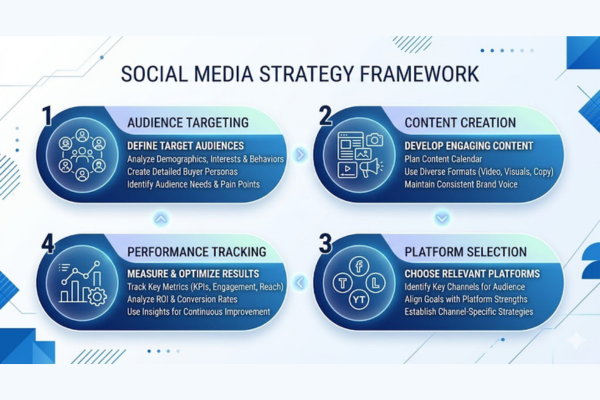
A high-performing strategy integrates four operational pillars. Each pillar directly impacts reach, engagement, and conversion efficiency.
Audience targeting: Identify demographics, interests, and behaviors using platform-specific data from Meta Ads Manager or TikTok Analytics. This step prioritizes segmentation accuracy and improves ad relevance scores, which reduces cost-per-click by 20–50% in competitive niches [site: Meta Business Help Center].
Content creation: Develop consistent, high-quality content aligned with brand voice and intent. Use formats like short-form video, carousels, and infographics. High-retention formats like Reels or TikTok increase dwell time and boost organic reach through algorithmic prioritization.
Platform selection: Choose channels where your audience is active. For example, Gen Z users dominate TikTok and Instagram, while LinkedIn drives B2B lead generation. Platform choice determines content tone, posting cadence, and campaign structure.
Performance tracking: Measure KPIs such as followers, reach, click-through rate, and conversions. Tools like Google Analytics 4 and HubSpot provide data-driven reports that support real-time campaign optimization and prove social ROI.
A strategy that integrates these components produces consistent audience engagement and long-term brand loyalty. Industry benchmarks from the Content Marketing Institute confirm that documented strategies outperform undocumented ones in campaign effectiveness and ROI [site: Content Marketing Institute 2024].
Why is a social media strategy important for small businesses?
A social media strategy is important for small businesses because it creates a structured path to growth, visibility, and customer engagement. In small business marketing, a cost-effective system to reach and convert audiences enables brands to boost awareness, build trust, and generate leads without large budgets.
It strengthens brand recognition across social media platforms. Consistent messaging and visual identity improve recall by 60–80% based on branding studies [site: Lucidpress Brand Consistency Report]. This approach builds a reliable social media presence that customers recognize instantly.
It builds trust through direct interaction and transparency. Two-way dialogue increases customer satisfaction and loyalty. Features like comments, DMs, and reviews enable personalized customer care and faster response cycles.
It drives growth with measurable ROI and minimal financial investment. Organic social media and paid campaigns together increase traffic and conversions. According to a U.S. Small Business Administration digital guide, structured strategies improve lead generation efficiency across channels [site: SBA.gov].
How does a social media strategy work step by step?
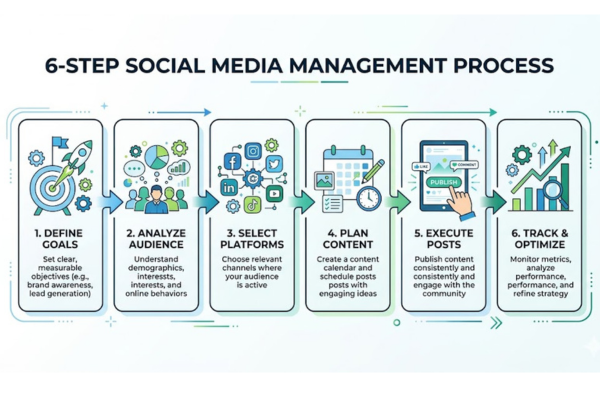
A social media strategy works step by step by setting goals, analyzing the audience, planning content, selecting platforms, executing posts, and measuring performance. This structured execution process from planning to optimization ensures consistent results and aligns campaigns with measurable business objectives.
Follow this sequence to build a strategy that performs consistently:
Define clear goals: Set specific objectives like increasing brand awareness, generating leads, or driving traffic. Use measurable KPIs such as reach, click-through rate, and conversions to track progress.
Analyze target audience: Identify demographics, interests, and behaviors using tools like Google Analytics 4 and Meta Audience Insights. This step aligns content with target audience's needs and improves engagement accuracy.
Select the right platforms: Choose social media channels where your audience is active. For example, LinkedIn works for B2B, while Instagram and TikTok dominate Gen Z users.
Plan content strategy: Create a posting calendar with content formats like short-form video, infographics, and carousels. A regular predictable schedule increases visibility and maintains audience attention.
Execute and publish content: Post consistently using scheduling tools like Hootsuite or Buffer. Focus on posting compelling content that encourages interaction and increases dwell time.
Track and optimize performance: Monitor KPIs using platform analytics and reporting tools. Use data-driven reports to adjust campaigns, improve targeting, and achieve better ROI over time [site: HubSpot Marketing Report].
What are the core components of a successful social media strategy?
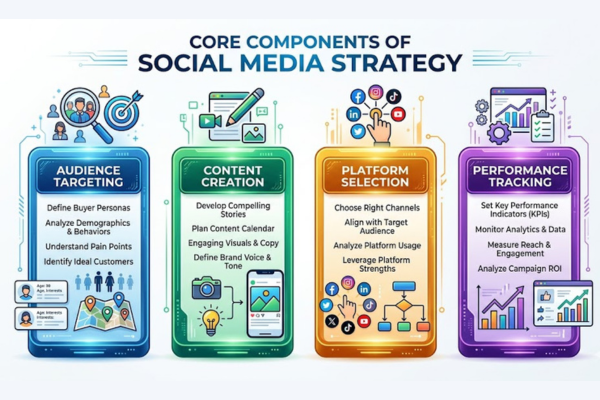
A successful social media strategy is a framework that combines audience targeting, content creation, platform selection, consistency, and performance measurement. These elements form the essential pillars that drive engagement and growth, ensuring campaigns remain aligned with business goals and audience expectations.
Core components with actionable execution
Each component plays a defined operational role. Strong execution across all areas produces consistent results.
Audience targeting: Use platform-specific data to identify demographics, interests, and behaviors. Prioritize audience segmentation to improve ad relevance and maximize reach efficiency.
Content pillars and creation: Develop 3–5 themes such as education, promotion, and engagement. Focus on creating engaging content using formats like videos, infographics, and reels to increase retention.
Platform selection: Choose channels based on user behavior and intent. A tailored social strategy ensures content fits platform algorithms and user expectations.
Consistency and scheduling: Maintain a regular posting cadence using a social media scheduling tool. A structured calendar supports ongoing effort and stabilizes engagement patterns.
Performance tracking: Measure engagement, conversions, and ROI using analytics tools. Track performance across campaigns to identify top-performing content and refine strategy using data-driven insights.
Research from the Content Marketing Institute shows that documented strategies outperform ad hoc efforts in engagement and conversion metrics [site: Content Marketing Institute 2024].
How should a social media strategy choose the right platforms?
A social media strategy should choose the right platforms by analyzing audience behavior, aligning with business goals, and evaluating available resources. This alignment of audience, goals, and platform capabilities ensures efficient reach, stronger engagement, and optimized campaign performance across social media channels.
Platform selection starts with audience data. Tools like Meta Audience Insights and Google Analytics 4 reveal demographics, interests, and behaviors. This data shows where social media users spend time and what content drives interaction.
Business goals define platform priority. LinkedIn supports B2B lead generation, while Instagram and TikTok drive visual engagement and brand awareness. Each platform serves a distinct role in a media marketing strategy.
Evaluate resources before committing. Video-heavy platforms require editing skills, while text-focused channels demand consistency and speed. A Harvard Business Review analysis on digital channel fit highlights resource alignment as critical for ROI efficiency [site: Harvard Business Review].
What content types should a social media strategy include?
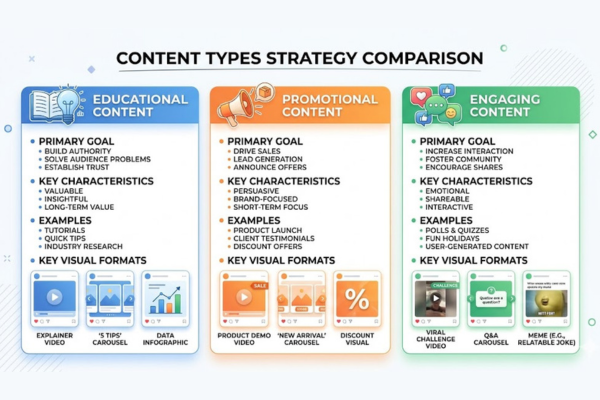
A social media strategy includes a mix of educational, promotional, and engaging content designed to attract, inform, and convert audiences. This balance creates a diversified content mix that drives engagement and conversions while supporting brand storytelling and long-term audience interest.
Educational content builds authority and trust. Tutorials, how-to posts, and industry insights provide genuine value. This approach positions brands as reliable sources and increases retention across social media feeds.
Promotional content drives conversions and revenue. Product launches, offers, and case studies highlight value propositions. Controlled frequency prevents audience fatigue and maintains credibility.
Engaging content strengthens relationships and interaction. Polls, memes, short-form video, and user-generated content encourage participation. Research from Sprout Social’s engagement report shows interactive posts increase response rates by over 30% [site: Sprout Social Index].
How does a social media strategy measure and optimize performance?
A social media strategy measures and optimizes performance by tracking KPIs, analyzing data, and adjusting campaigns based on insights. This continuous cycle of measurement and refinement ensures improved engagement, higher conversions, and efficient use of marketing resources.
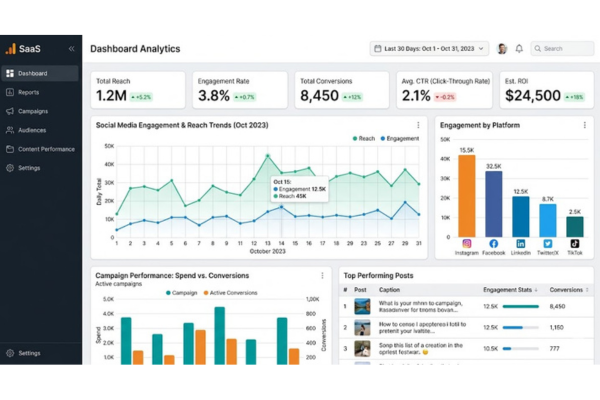
Performance measurement relies on defined KPIs. Metrics include followers, reach, click-through rate, and conversions. These indicators show how effectively campaigns achieve business goals.
Optimization uses analytics to refine strategy. Platforms like Google Analytics 4 and HubSpot provide data-driven insights into audience behavior and content performance. This enables real-time campaign optimization and improved targeting accuracy.
Timing and content adjustments increase results. Posting during peak engagement hours and refining content formats improves reach. A report from the Digital Marketing Institute confirms that data-led optimization improves ROI consistency across campaigns [site: Digital Marketing Institute].
How can common mistakes related to a social media strategy be avoided?
Common mistakes related to a social media strategy are avoided by enforcing consistency, using data for decisions, and maintaining clear brand guidelines. This proactive management of strategy gaps and execution errors prevents performance decline and ensures sustained audience engagement.
Inconsistency reduces visibility and trust. A structured posting calendar ensures regular output and stable engagement. Consistent activity signals reliability to both users and platform algorithms.
Ignoring data leads to poor decisions. Performance tracking identifies what works and what fails. Using analytics tools prevents wasted effort and supports informed adjustments.
Weak brand identity confuses audiences. Clear guidelines for tone, visuals, and messaging maintain alignment. The Content Marketing Institute reports that consistent branding improves recognition and engagement across channels [site: Content Marketing Institute 2024].
When should changes be made to a social media strategy for better flexibility?
Changes should be made to a social media strategy when performance declines, audience behavior shifts, or business goals change. This ensures timely adjustments based on performance signals and market changes so campaigns stay aligned with objectives and maintain consistent engagement and conversion efficiency.
Performance data triggers the first signal. A drop of 15–30% in reach or engagement indicates declining content relevance. Analytics from Meta or Google Analytics 4 highlight underperforming formats and timing gaps.
Audience behavior changes require immediate response. Platform trends, such as short-form video growth, shift attention patterns. Adapting content formats increases dwell time and restores engagement momentum.
Business objectives also drive strategic pivots. Product launches, seasonal campaigns, or budget shifts demand content realignment. A McKinsey digital marketing insights report confirms agile adjustments improve campaign ROI consistency [site: McKinsey Digital Insights].
Which tools and methods support execution in a social media strategy?
A social media strategy uses tools and methods like scheduling platforms, analytics systems, and content management solutions to execute efficiently. These tools create a streamlined system for planning, publishing, and performance tracking that improves workflow efficiency and ensures consistent content delivery.
Execution depends on integrated tools across planning, publishing, and analysis:
Scheduling tools: Platforms like Hootsuite and Buffer automate posting and maintain a regular predictable schedule. These tools reduce manual effort and support consistent social media presence.
Analytics tools: Google Analytics 4, Sprout Social, and Meta Insights provide data-driven reports on engagement, reach, and conversions. These insights enable real-time campaign optimization.
Content management systems: Tools like HubSpot or Notion organize content workflows, centralize communication, and support team collaboration. This structure improves content quality and alignment.
AI-powered tools: Platforms like Jasper and Canva use AI-powered analytics and automated posting features. These tools assist with content recommendations, creation, and visual optimization.
Research from Gartner marketing technology reports shows integrated tool stacks improve campaign efficiency and reduce execution time by up to 30% [site: Gartner Marketing Tech Report].
How does a social media strategy define business goals and audience targeting?
A social media strategy defines business goals and audience targeting by aligning measurable objectives with detailed audience research. This creates clear, data-backed goals tied to specific audience segments that improve targeting precision and campaign effectiveness.
Goal setting starts with measurable objectives. Define targets like increasing traffic by 25% or generating 100 leads per month. These goals connect directly to broader business outcomes.
Audience targeting relies on data analysis. Use tools like Meta Audience Insights and Google Analytics 4 to identify demographics, interests, and behaviors. This process ensures alignment with the target audience's needs.
Persona development refines targeting accuracy. Build profiles based on age, income, location, and behavior patterns. According to a HubSpot marketing benchmark report, persona-driven campaigns improve conversion rates significantly [site: HubSpot State of Marketing].
How does a social media strategy use content to drive engagement and conversions through the marketing funnel?
A social media strategy uses content by mapping formats and messages to each stage of the marketing funnel. This creates social media content creation for businesses aligned with awareness, consideration, and conversion stages that guides users from discovery to action and improves overall conversion rates.
Awareness stage focuses on reach and visibility. Use short-form video, educational posts, and infographics to attract attention. These formats increase brand awareness and expand audience reach.
Consideration stage builds trust and interest. Case studies, testimonials, and comparison content provide deeper insights. This stage encourages users to evaluate offerings and engage more actively.
Conversion stage drives action and sales. Offers, product demos, and strong calls-to-action generate leads and purchases. A Salesforce marketing trends report confirms funnel-based content improves conversion efficiency across digital channels [site: Salesforce Research].
How does a social media strategy prioritize actions with limited time and budget?
A social media strategy prioritizes actions by focusing on high-impact tasks, efficient resource allocation, and measurable outcomes. This ensures maximum return from limited time and budget resources while maintaining consistent growth and engagement.
Start with high-impact channels and content. Focus on platforms where your audience is most active. This reduces wasted effort and improves reach efficiency.
Allocate resources based on performance data. Invest more time in top-performing content formats and campaigns. This approach increases ROI and reduces unnecessary spending.
Use automation to save time. Scheduling tools and AI-powered solutions streamline workflows and reduce manual tasks. A Deloitte digital efficiency study highlights automation as a key driver of productivity in marketing operations [site: Deloitte Digital].
How does a social media strategy use data and analytics for performance improvement?
A social media strategy uses data and analytics by collecting performance metrics, analyzing audience behavior, and optimizing campaigns based on insights. This creates a continuous improvement loop driven by measurable performance data that enhances engagement, targeting accuracy, and ROI.
Data collection starts with defined KPIs. Metrics like reach, engagement rate, and conversions provide measurable benchmarks. These indicators show how campaigns perform across social media platforms.
Analysis identifies patterns and opportunities. Tools like Google Analytics 4 and Sprout Social reveal audience behavior and top-performing content. This enables informed decisions and evaluate ROI using performance metrics to adjust targeted parameters.
Optimization improves results over time. Adjust posting schedules, content formats, and targeting parameters based on insights. According to a report from the Digital Marketing Institute, data-driven strategies consistently outperform non-optimized campaigns in ROI [site: Digital Marketing Institute].
How does a social media strategy organize workflows to maintain consistency without burnout?
A social media strategy organizes workflows by structuring tasks, using content calendars, and automating repetitive actions. This creates a repeatable system that balances consistency and workload efficiency so teams maintain a steady posting rhythm without burnout or performance decline.
workflow management starts with a content calendar. Tools like Notion or Trello plan posts weekly or monthly. A structured calendar ensures a regular predictable schedule and reduces last-minute pressure.
Automation reduces manual effort significantly. Scheduling tools like Hootsuite handle publishing and timing. This allows teams to focus on creating engaging content instead of repetitive posting tasks.
Clear role allocation improves efficiency. Assign content creation, approval, and analytics to specific team members. A HubSpot operations report highlights defined workflows as key to sustained productivity in social media management [site: HubSpot Operations Report].
How does a social media strategy balance content types and storytelling for stronger engagement?
A social media strategy balances content types by mixing educational, promotional, and storytelling formats to maintain engagement. This creates a strategic blend of value-driven content and narrative storytelling that captures attention and builds emotional connections with the audience.
Content variety keeps audiences engaged across different intent levels. Educational posts inform, promotional posts convert, and engaging posts entertain. This mix prevents content fatigue and improves interaction rates.
Storytelling adds depth and relatability. Share authentic content through customer experiences, behind-the-scenes clips, or founder stories. Visual storytelling and influencer marketing strengthen emotional resonance and brand recall.
Consistency in tone and message is critical. Align all formats with brand identity and audience expectations. Research from Nielsen’s consumer trust study confirms storytelling-driven content improves trust and engagement rates [site: Nielsen Consumer Trust Study].
How often should a social media strategy be updated, and when should changes be made?
A social media strategy should be updated quarterly, with ongoing adjustments based on performance data and trends. This ensures regular review cycles combined with real-time optimization triggers so campaigns remain relevant, effective, and aligned with evolving audience behavior.
Quarterly reviews assess overall performance and direction. Evaluate KPIs, content effectiveness, and platform performance. This structured review aligns strategy with business objectives.
Real-time changes respond to performance shifts. Declines in reach or engagement require immediate adjustments. Trend analysis and audience feedback guide content updates and timing improvements.
Platform changes also demand updates. Algorithm updates or feature releases impact visibility. A report from the Digital Marketing Institute confirms frequent optimization improves long-term ROI stability [site: Digital Marketing Institute].
How does inconsistency or lack of strategy impact results in social media marketing?
Inconsistency or lack of strategy impacts results by reducing visibility, weakening brand identity, and lowering engagement. This leads to loss of audience trust and declining performance metrics across campaigns, limiting growth and conversion opportunities.
Irregular posting disrupts algorithm performance. Platforms prioritize active accounts with consistent activity. Gaps in posting reduce reach and engagement over time.
Inconsistent branding confuses the audience. Mixed messaging weakens recognition and trust. A clear, defined social media presence ensures familiarity and credibility.
Lack of data-driven planning wastes resources. Campaigns without performance tracking fail to improve. Content Marketing Institute research shows structured strategies outperform inconsistent efforts significantly [site: Content Marketing Institute 2024]
How does a social media strategy align platforms with audience behavior?
A social media strategy aligns platforms by analyzing audience behavior and matching it with platform strengths and content formats. This creates a precise match between user activity patterns and platform capabilities that improves engagement, reach, and conversion outcomes.
Audience behavior analysis identifies where users spend time. Tools like Google Analytics 4 and Meta Insights reveal demographics, interests, and engagement patterns. This data guides platform selection.
Each platform supports different behaviors. Instagram and TikTok favor short-form video and visual content. LinkedIn supports professional content and B2B communication.
Matching intent with the platform increases efficiency. Use platform-specific data to optimize content formats and timing. A Pew Research Center report highlights platform usage differences across age groups and industries [site: Pew Research Center].
Which platforms are most effective for different small business types?
The most effective platforms for small businesses depend on industry, audience, and marketing goals. This creates platform-specific advantages based on business model and customer behavior that improve targeting precision and overall marketing efficiency.
E-commerce businesses perform best on visual platforms. Instagram and TikTok drive product discovery through short-form video and influencer marketing. These platforms increase brand awareness and conversions.
service-based businesses benefit from local and trust-driven platforms. Facebook and Google Business Profile support reviews, updates, and direct communication. This improves customer engagement and lead generation.
B2B businesses rely on professional networks. LinkedIn enables lead generation, networking, and content distribution. According to a LinkedIn marketing solutions report, B2B marketers achieve higher lead quality through targeted campaigns [site: LinkedIn Marketing Solutions].
How does a social media strategy prioritize platforms with limited resources?
A social media strategy prioritizes platforms by evaluating ROI potential, audience concentration, and content efficiency. This ensures maximum impact from limited time and budget allocation by focusing efforts on high-performing platforms that align with business goals and audience behavior.
Start with audience density and intent. Identify where your target audience spends the most time. Platforms with higher engagement rates deliver better organic and paid performance.
Evaluate ROI using performance metrics. Track conversions, cost-per-click, and engagement rates across platforms. This data-driven approach helps allocate resources to top-performing channels.
Limit focus to 1–3 platforms initially. Concentrating effort improves consistency and content quality. A report from HubSpot shows focused channel strategies outperform scattered efforts in ROI efficiency [site: HubSpot State of Marketing].
How does a social media strategy start with clear business objectives?
A social media strategy starts with clear business objectives by defining measurable goals aligned with overall company outcomes. This creates a direct link between social media actions and business performance metrics ensuring every campaign contributes to growth, awareness, or revenue generation.
Objective setting begins with specificity. Define targets like increasing website traffic by 30% or generating 50 qualified leads monthly. These measurable goals guide content and campaign direction.
Align objectives with business priorities. Growth, lead generation, or customer retention determine strategy focus. This alignment ensures social media efforts support broader marketing strategy outcomes.
Use KPIs to track progress. Metrics like engagement rate, conversions, and reach measure effectiveness. According to the Digital Marketing Institute, clear goal setting improves campaign success rates significantly [site: Digital Marketing Institute]
How does a social media strategy plan content ideas and campaigns?
A social media strategy plans content ideas and campaigns by combining audience insights, business goals, and structured brainstorming. This builds a content roadmap aligned with audience interest and campaign objectives, ensuring consistent messaging and measurable results across all social media channels.
Planning starts with audience research and trend analysis. Use tools like Google Trends and platform analytics to identify topics and formats. This ensures relevance and increases engagement potential.
Brainstorm content aligned with objectives. Create ideas for educational, promotional, and engaging posts. Campaign themes should support product launches, seasonal events, or brand storytelling.
Develop a campaign calendar for execution. Organize content weekly or monthly with clear timelines. A Content Marketing Institute study confirms structured planning improves content performance and consistency [site: Content Marketing Institute 2024].
How does a social media strategy organize posting and scheduling workflows?
A social media strategy organizes posting and scheduling workflows by using structured calendars, defined timelines, and automation tools. This creates a systematic publishing process that ensures consistent visibility and engagement while reducing manual workload and execution errors.
Start with a content calendar. Plan posts by date, platform, and format. This structure ensures a regular predictable schedule and balanced content distribution.
Use scheduling tools for automation. Platforms like Buffer and Hootsuite automate publishing and optimize posting times. This improves efficiency and maintains consistent activity.
Align posting with peak engagement times. Analyze platform data to identify high-traffic hours. Research from Sprout Social shows optimized timing increases engagement rates significantly [site: Sprout Social Index].
How does a social media strategy maintain consistency without burnout?
A social media strategy maintains consistency without burnout by balancing workload, automating tasks, and prioritizing high-impact content. This ensures sustainable content production without overwhelming resources or reducing quality while maintaining steady audience engagement.
Batch content creation improves efficiency. Produce multiple posts in one session to reduce daily workload. This approach supports consistent output without constant pressure.
Use automation to handle repetitive tasks. Scheduling tools and AI-powered systems streamline posting and reporting. This reduces manual effort and improves workflow efficiency.
Focus on quality over quantity. Posting 3–5 high-value pieces weekly outperforms daily low-quality posts. A Deloitte digital productivity report highlights focused output as key to long-term sustainability [site: Deloitte Digital].
How does a social media strategy balance educational, promotional, and engaging content?
A social media strategy balances content by distributing educational, promotional, and engaging posts based on audience intent and campaign goals. This creates a structured content mix that maintains interest while driving conversions across different stages of the customer journey.
Educational content builds trust and authority. Tutorials, insights, and guides provide genuine value and improve audience retention. This strengthens long-term brand credibility.
Promotional content drives conversions and revenue. Offers, product highlights, and case studies push users toward action. Controlled frequency prevents audience fatigue and preserves trust.
Engaging content boosts interaction and visibility. Polls, memes, and short-form videos encourage participation. According to a Sprout Social report, interactive content increases engagement rates by over 30% [site: Sprout Social Index].
How does a social media strategy use different content formats for better performance?
A social media strategy uses different content formats by matching format type with platform behavior and audience preferences. This creates format-platform alignment that maximizes reach, engagement, and retention across diverse social media channels.
Short-form video drives high engagement. Platforms like TikTok and Instagram prioritize video content in algorithms. This format increases dwell time and boosts discoverability.
Visual formats enhance storytelling and retention. Infographics and carousels simplify complex information. These formats improve understanding and shareability.
Text and long-form content support depth. LinkedIn posts and blogs provide detailed insights for professional audiences. A HubSpot content trends report confirms multi-format strategies outperform single-format approaches [site: HubSpot Content Trends].
How does storytelling strengthen a social media strategy?
A social media strategy strengthens storytelling by creating emotional connections and making content more relatable and memorable. This builds a deeper audience connection that increases engagement and brand loyalty while differentiating the brand in competitive social media environments.
Storytelling humanizes the brand. Share customer journeys, behind-the-scenes moments, and real experiences. This approach builds trust and authenticity.
Narrative structure improves content impact. Use a clear beginning, challenge, and resolution. This format keeps users engaged and increases retention.
User-generated content enhances credibility. Real stories from customers act as social proof. Nielsen research shows consumers trust peer content more than brand messaging [site: Nielsen Consumer Trust Study].
Which metrics and KPIs matter most in a social media strategy?
The metrics and KPIs that matter most in a social media strategy include engagement rate, reach, conversions, and ROI. These indicators form the core performance signals that measure growth, engagement, and revenue impact and guide optimization decisions across campaigns and platforms.
Focus on metrics that reflect real outcomes. Vanity metrics like likes matter less than conversions or click-through rates. KPIs such as followers, reach, and click rates show audience growth and interaction levels.
Interpret metrics in context. A 2–5% engagement rate is strong on Instagram, while LinkedIn ranges from 1–3%. Compare performance across platforms to identify trends and adjust content strategy.
Use KPIs to refine campaigns. Track engagement conversions and audience behavior shifts. A HubSpot benchmark report highlights KPI-driven strategies as key to improving social ROI [site: HubSpot State of Marketing].
How does a social media strategy use data to improve results?
A social media strategy uses data by analyzing performance metrics, identifying patterns, and adjusting campaigns accordingly. This creates a continuous optimization loop driven by audience insights and performance data that improves engagement, reach, and conversion outcomes over time.
Data analysis reveals audience behavior. Tools like Google Analytics 4 and Meta Insights show demographics, interests, and engagement patterns. These insights guide content creation and targeting decisions.
Performance data identifies top-performing content. Analyze posts with high reach and conversions. This approach helps replicate success and eliminate underperforming formats.
Optimization follows data signals. Adjust posting times, formats, and messaging based on results. A Digital Marketing Institute report confirms data-driven strategies outperform traditional approaches in ROI consistency [site: Digital Marketing Institute].
How does a social media strategy avoid common mistakes, such as inconsistency or lack of strategy?
A social media strategy avoids common mistakes by enforcing planning, consistency, and data-driven decision-making. This creates a structured system that prevents errors and maintains steady performance across social media campaigns and content execution.
Consistency requires a defined posting schedule. Use a content calendar to maintain regular output. This prevents gaps that reduce visibility and engagement.
Planning eliminates reactive content creation. Structured workflows align content with business goals and audience needs. This improves relevance and campaign effectiveness.
Data prevents repeated mistakes. Analytics tools identify weak performance areas and guide improvements. Content Marketing Institute research shows structured strategies outperform inconsistent efforts significantly [site: Content Marketing Institute 2024].
How do scheduling tools support execution in a social media strategy?
Scheduling tools support execution by automating publishing, organizing workflows, and optimizing posting times. This creates an efficient system for consistent posting and time management that improves productivity and ensures steady audience engagement.
Automation reduces manual workload. Tools like Hootsuite and Buffer schedule posts across multiple platforms. This ensures a regular predictable schedule without daily effort.
Scheduling tools improve timing accuracy. Analyze engagement data to post during peak hours. This increases reach and interaction rates across social media channels.
Workflow efficiency improves team performance. Centralized dashboards streamline content approval and publishing. A Gartner report highlights automation as key to improving marketing execution efficiency [site: Gartner Marketing Tech Report].
Why are analytics tools essential for improving results in a social media strategy?
Analytics tools are essential because they measure performance, reveal insights, and guide optimization decisions. They provide actionable data that drives performance improvements and ROI growth across all social media activities and campaigns.
These tools track key metrics in real time. Platforms like Google Analytics 4 and Sprout Social monitor engagement, reach, and conversions. This enables accurate performance evaluation.
Insights inform strategic adjustments. Identify top-performing content and audience segments. This allows targeted improvements in messaging and format selection.
ROI measurement validates strategy effectiveness. Data-driven reports highlight campaign impact on business goals. A Deloitte digital analytics study confirms analytics-driven marketing improves efficiency and outcomes [site: Deloitte Digital].
How do content calendars support execution in a social media strategy?
Content calendars support execution by organizing posts, aligning campaigns, and ensuring consistent publishing. This creates a structured planning system that maintains consistency and reduces execution errors across social media workflows.
Calendars provide clear visibility into content plans. Tools like Notion or Trello map posts by date, platform, and format. This structure ensures balanced and timely publishing.
They improve consistency and coordination. Teams follow a predefined schedule and avoid last-minute content gaps. This strengthens brand presence and audience trust.
Content calendars support strategic alignment. Plan campaigns around events, product launches, and trends. A Content Marketing Institute study shows planned content improves performance and engagement consistency [site: Content Marketing Institute 2024].