
How Many Times Per Week Should a Business Post on Social Media?
How Often Should a Business Post on Social Media?
Minimum Posting Frequency for a Business on Social Media To stay visible and relevant on social media, businesses should aim for a minimum of three posts per week. Consistent posting helps maintain your social media presence and ensures your audience remains engaged.
Posting too infrequently can harm your audience retention, leading to reduced visibility in users' feeds. This decline in activity can also result in decreased engagement rates, where fewer users interact with your content. The key to combating this issue is developing a social media strategy that emphasizes regular content production while maintaining brand consistency. Whether it’s through content creation or batch content production, the focus should always be on offering valuable and engaging material for your audience.
Moreover, failing to post regularly can hinder your ability to track key performance indicators (KPIs) like engagement rates, reach, and conversion rates, ultimately affecting your long-term business goals.
How Many Times Per Week Should a Business Post on Social Media for Optimal Results?
For optimal reach, engagement, and growth, businesses should aim for at least 3–5 posts per week. This consistent posting frequency keeps your brand visible while allowing ample opportunities for audience engagement.
An active posting schedule helps maintain a strong social media presence and fuels your content strategy. Posting 3–5 times a week strikes a balance between visibility and audience engagement. With the right mix of social media content, your posts can increase audience growth, drive interactions, and improve engagement rates. Research by HubSpot found that businesses posting daily experience higher engagement levels compared to those posting less frequently. However, the ideal frequency may vary depending on the platform and industry specifics.
What Is the Ideal Posting Frequency for Consistent Growth?
The ideal posting frequency for consistent growth is posting at least three times per week. This frequency helps businesses build momentum without overwhelming their audience.
Consistent posting helps foster brand loyalty and nurtures audience engagement over time. Using a content calendar ensures regularity, maintaining interest and keeping your audience engaged. To avoid overwhelming followers, prioritize creating a content strategy that aligns with your brand’s voice and provides a balance of educational, entertaining, and promotional content. Tools like batch content production allow businesses to plan, ensuring a steady flow of posts without last-minute scrambling.
Is Daily Posting Better Than Weekly Posting for a Business on Social Media?
Daily posting can be more effective than weekly posting, depending on your business type, audience engagement, and the platform you’re using.
For platforms like Instagram and Twitter, daily posts help maintain momentum and keep your brand visible in fast-moving feeds. On the other hand, weekly posting works better for businesses focusing on quality over quantity, such as those offering professional services or highly curated content. Daily posts benefit industries where constant audience interaction is key, while weekly posts can serve industries that require more thought-out strategies or in-depth content. A careful blend of content frequency based on audience needs and platform demands is essential for crafting a successful social media strategy. This also means thinking carefully about the type of content you post, since whether you go static or video affects how often you should be showing up.
Why Does Posting Frequency Matter for a Business?
Posting frequency directly influences engagement rates, reach, and audience connection, making it essential for businesses aiming to grow on social media. A consistent posting schedule improves brand visibility and ensures your content reaches the right audience.
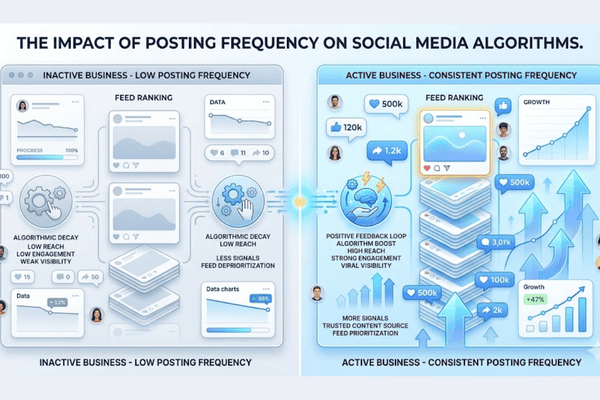
Social media platforms, powered by complex platform algorithms, prioritize content from active accounts. When businesses post consistently, their content is more likely to appear in followers' feeds and be recommended to new users. This results in more engagement, better audience retention, and the ability to drive real business results. Regular posts create an ongoing conversation, keeping your business top-of-mind and fostering lasting relationships with followers.
How Does Posting Frequency Affect Social Media Reach and Visibility?
Frequent posting significantly boosts the likelihood that your content will appear in followers' feeds and recommended sections. Consistent posts signal to social media algorithms that your account is active, increasing the chances of higher visibility.
The more often you post, the more likely your content will be seen by a wider audience. Platform algorithms tend to prioritize posts that generate consistent engagement. By maintaining a steady post frequency, businesses increase the potential for content to be ranked higher, gaining broader reach and visibility. Consistently engaging content also helps establish a business as relevant and reliable, further promoting organic growth.
How Does Posting Frequency Contribute to Brand Awareness?
Frequent posting keeps a business top-of-mind for its audience, enhancing brand recall and ensuring that the brand stays visible amidst a crowded digital space. The more often a business posts, the more its audience is exposed to its message.
By maintaining a regular posting schedule, brands create continuous reminders for their audience. Successful examples like Coca-Cola and Nike leverage consistent posts to drive brand awareness, ensuring their names are always in front of potential customers. With an effective social media content strategy, businesses can reinforce their messaging and increase their visibility, leading to higher brand recognition.
How Does Posting Frequency Support Lead Generation and Conversions?
Posting frequently on social media helps maintain consistent audience interaction, a crucial element for lead generation. Regular posts keep your audience engaged and open the door for conversions through well-timed calls to action (CTAs).
By fostering an active community and providing engaging content, businesses can lead followers down the conversion funnel. Offering social media marketing promotions and timely product offerings can turn engagements into tangible results. For example, online retail brands use frequent social media posts to highlight new arrivals, driving immediate sales with compelling CTAs.
What Happens When a Business Posts Too Little or Too Frequently?
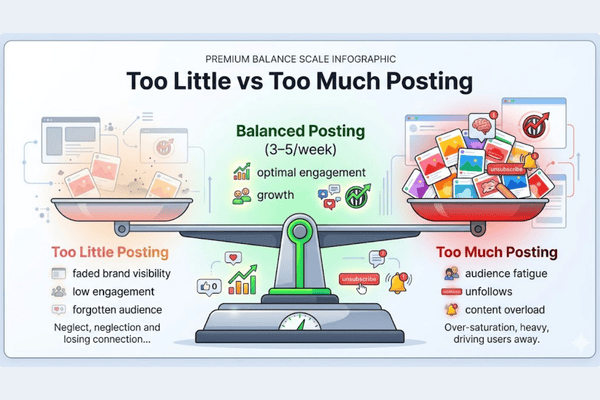
Posting too little can result in inconsistent posting, leading to reduced visibility and engagement. On the other hand, posting too frequently can cause audience fatigue, as followers may feel overwhelmed by constant updates.
Finding a balanced approach is crucial. Overposting can annoy your audience and lead to a decline in engagement rates, while posting too little can make your brand seem inactive. The key is to maintain consistency without overwhelming your followers. By measuring audience response, businesses can fine-tune their posting frequency to avoid these social media mistakes and achieve optimal engagement.
What Happens When a Business Posts Too Little on Social Media?
Posting too infrequently can reduce brand visibility and leave your business out of the minds of your audience. The inconsistency can also lead to lower engagement and missed opportunities.
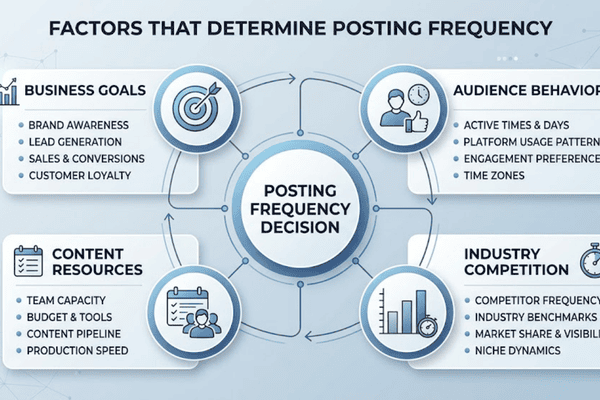
The right posting frequency ensures your business stays relevant and engaged with its audience. Factors like business goals, content resources, and industry competition all play a role in determining how often you should post. Evaluating these elements helps create a manageable schedule that balances visibility without overwhelming your resources. For example, a social media manager may focus on 2–3 posts per week when resources are limited but may increase frequency as the competition intensifies.
Why Is Inconsistent Posting Harmful to Growth?
Inconsistent posting can hurt audience engagement and brand trust, ultimately limiting your growth potential. When you don’t maintain a steady rhythm, your audience may forget about your business.
When a brand posts sporadically, it disrupts the connection with followers. Engagement drops, as the algorithm may penalize infrequent content, reducing visibility. Irregular posts make it harder to establish a predictable and reliable brand presence. This lack of consistency creates growth obstacles that make it difficult to build long-term relationships with your audience.
What Happens When a Business Posts Too Frequently on Social Media?
Posting too often can lead to audience fatigue, overwhelming followers and causing them to disengage. When posts saturate feeds, users may become annoyed and unfollow.
Overposting dilutes the effectiveness of your content and leads to engagement decline. Followers who feel bombarded by excessive posts may experience content saturation, where each new post loses its impact. Balancing frequency is key; businesses should aim to engage their audience without causing irritation or reducing content quality.
Why Does Posting Without Strategy Reduce Engagement?
Posting without a clear strategy can reduce engagement and undermine your ability to connect with the audience. Both excessive and insufficient posting are ineffective without planning.
A posting strategy that targets the right audience and aligns with your goals is crucial for maintaining interest. Without strategic content planning, posts can seem disconnected, leaving followers uninterested. It's essential to ensure posts serve a clear purpose, whether it's driving audience growth, reinforcing brand awareness, or improving engagement rates.
What Factors Determine Social Media Posting Frequency?
Business goals, audience behavior, and available resources are key factors influencing posting frequency. These elements should be carefully considered to determine a posting schedule that aligns with overall objectives.
Your content strategy must take these factors into account. If your goal is to increase brand visibility and reach new customers, posting frequently may be necessary. However, businesses with limited resources may need to prioritize quality over quantity. Evaluating audience behavior can also inform the optimal frequency, as certain audiences may respond better to less frequent, more targeted content.
How Do Business Goals Affect Social Media Posting Frequency?
Business goals directly shape the frequency of social media posts. For example, a business focused on brand awareness may need to post more frequently than one focused on driving sales.
Brand visibility plays a key role in determining posting frequency. Businesses aiming for awareness often need a higher volume of content to reach a larger audience consistently. On the other hand, companies with more focused sales-driven goals may opt for fewer, more strategic posts that showcase products or services. By aligning your posting schedule with your social media strategy, you ensure that every post serves a clear purpose in achieving your goals.
How Does Audience Behavior Influence Posting Frequency Decisions?
Understanding audience behavior is critical in determining the right posting frequency. By analyzing engagement patterns, businesses can adjust their posting schedule to match when their audience is most active.
Social media analytics offer insights into your audience’s preferences, including how often they engage with your content and when they are most active. If your audience engages more in the evenings or weekends, you may adjust your posting times accordingly. Regularly assessing engagement patterns ensures that your posts align with your audience's habits, making your strategy more effective.
How Do Content Resources Impact How Often a Business Can Post?
The availability of content resources significantly impacts how often a business can post on social media. More content resources—like a dedicated social media team—allow for more frequent posts.
Content planning plays a vital role when managing available resources. If a company has a robust content production system, it can sustain a higher posting frequency without sacrificing quality. However, businesses with limited resources may need to pace their posting frequency, ensuring each post aligns with the brand’s goals and maintains high quality. Outsourcing content creation or using batch content production can also help boost posting capacity.
How Does Industry Competition Affect Posting Frequency?
In highly competitive industries, businesses often need to increase posting frequency to stay ahead of their competition. More frequent posts help ensure visibility amidst the noise created by rival brands.
To maintain a strong social media presence, businesses in competitive markets should adopt a posting strategy that emphasizes visibility without overwhelming their audience. Posting too little can cause brands to lose relevance, while overposting can lead to content saturation. Finding the right balance is essential for staying competitive without alienating potential customers.
How to Balance Posting Frequency with Content Quality?
Balancing posting frequency with content quality is key to maintaining brand integrity and ensuring long-term audience trust. Businesses should aim for a regular posting schedule that doesn’t compromise the quality of their content.
Consistency doesn’t mean posting excessively—it means delivering high-quality content at a sustainable pace. Prioritize engaging content that resonates with your audience while staying true to your brand. By maintaining a clear content strategy and aligning it with business goals, companies can uphold content quality without overburdening their audience or their internal resources.
Why Does Content Quality Matter More Than Posting Frequency?
Content quality always trumps the quantity of posts when it comes to engaging your audience. A few well-crafted posts will outperform many mediocre ones in terms of audience engagement and brand reputation.
While frequent posting can keep your brand visible, the true value comes from creating meaningful content that resonates with your target audience. Quality content enhances brand trust and fosters deeper connections. Posting too often with low-quality material can damage your brand integrity, leading to disengagement and a negative perception.
How Can a Business Maintain Quality While Posting Consistently?
To maintain high-quality content while posting consistently, businesses should develop a content planning strategy that aligns with their goals. Batch content production and a clear brand voice are essential.
By planning ahead, businesses can ensure each post is purposeful and aligned with their messaging. Tools like content calendars help in maintaining consistency without compromising quality. Furthermore, regularly reviewing performance data allows businesses to adjust their social media consistency strategy and continue delivering value to their audience.
What Is the Trade-Off Between Consistency and Content Value?
The balance between consistency vs. content value is about finding the right rhythm between frequent posting and producing content that adds value. Posting too often can lead to audience fatigue, while too few posts might diminish brand engagement.
A successful content strategy strikes a balance that prioritizes meaningful content while maintaining a steady presence. Consistency builds audience loyalty, but it's the value of the content that keeps followers engaged long term. By prioritizing audience needs over sheer frequency, businesses can ensure that their posts contribute to stronger, more sustained brand engagement.
How to Determine the Right Posting Frequency for Your Business?
To determine the optimal posting frequency, businesses should align their social media activities with their business goals and audience insights. This can be done by regularly assessing social media analytics.
Begin by identifying the type of engagement you want to foster. For brand awareness, frequent posting may be beneficial, while sales-driven goals may require more targeted, less frequent posts. Audience behavior can guide you to identify the most effective times to post, ensuring your schedule aligns with peak engagement periods.
How Should a Business Use Analytics to Determine Posting Frequency?
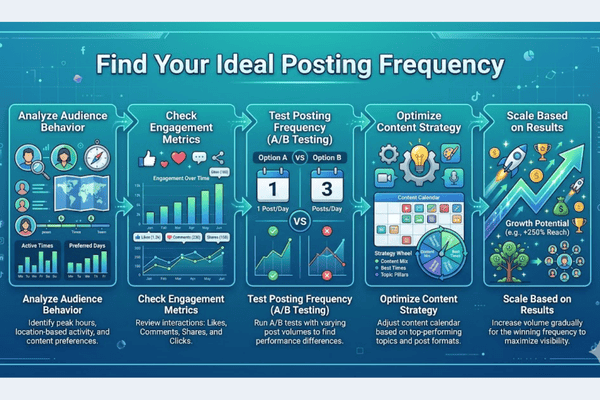
Social media analytics tools provide insights into audience engagement, helping businesses optimize their posting schedules. By evaluating metrics like interaction rates and peak times, businesses can refine their posting schedule.
Data-driven decisions ensure that your posts are made when your audience is most likely to engage. Metrics like engagement rates and reach indicate the ideal times and frequency for posts, allowing businesses to maximize their frequency optimization. By regularly reviewing these insights, businesses can adapt their strategies to keep posts relevant and effective. If you're unsure where to start, understanding what social media management includes can help clarify which tools and reporting are already built into a managed service.
How Can a Business Test and Optimize Posting Frequency Over Time?
Businesses can test and optimize posting frequency using A/B testing, comparing different posting schedules to see which one yields the best engagement tracking. By analyzing social media performance data, companies can refine their posting strategies.
For example, businesses might test posting once a day versus every other day to evaluate the impact on audience behavior and engagement rates. Regular performance reviews will reveal which frequency garners the most interaction, helping businesses adjust their approach for optimal results. Posting optimization based on these tests allows companies to increase visibility and engagement over time.
What Metrics Should a Business Track to Refine Posting Frequency?
Key social media metrics such as engagement rates, conversion tracking, and audience behavior should be tracked to refine posting frequency. These metrics provide insight into how your audience interacts with posts and whether your posting schedule aligns with their preferences.
Businesses should monitor reach, impressions, and click-through rates (CTR) to assess whether a more frequent or less frequent posting schedule drives better results. Conversion metrics like sales or lead generation will help refine the approach, ensuring that the chosen posting frequency maximizes engagement and conversion rates.
Consistency Strategies for Social Media Posting
Maintaining a consistent posting schedule is key to building trust with your audience. A well-thought-out content calendar can help businesses post regularly without overwhelming their resources or audience.
Planning ahead with a content calendar ensures that posts are evenly spaced out and aligned with your overall content strategy. Businesses can fill their calendar with a mix of planned content, including brand messaging, promotions, and user engagement, while accounting for peak audience activity times. This helps businesses stay visible without creating inconsistency or gaps.
How Does a Content Calendar Help Maintain Posting Frequency?
A content calendar is an invaluable tool for businesses aiming to maintain a steady posting frequency. By mapping out a clear schedule, businesses ensure they stay organized and consistent in their social media efforts.
The calendar allows businesses to plan posts in advance, balancing frequency with content variety. It helps social media managers align posts with marketing strategies, track upcoming events, and adjust content based on audience engagement. With a content calendar, businesses avoid last-minute scrambling and maintain a consistent posting schedule that builds momentum and trust over time.
How can content batching improve consistency?
Content batching helps businesses maintain consistent content production by allowing them to plan and create several pieces of content ahead of time. By dedicating blocks of time to focus solely on content creation, businesses can ensure a steady flow of posts without feeling overwhelmed by last-minute demands. This approach reduces stress, creates more engaging content, and aligns with a social media strategy that’s focused on quality and consistency. When you batch your content, you avoid the chaos of frequent content creation and can ensure every post meets brand standards and goals. Businesses that find this difficult to manage in-house often turn to a managed social media service to handle production and consistency on their behalf.
How does content repurposing support frequent posting?
Yes, content repurposing boosts efficiency by allowing businesses to reuse existing content in different formats. Repurposing could mean turning a blog post into a series of social media posts or transforming an infographic into a video. By repurposing content, businesses can maintain a consistent social media presence without starting from scratch every time. This saves time, maintains the brand message, and increases engagement without the need for new content production every single day.
When should a business adjust posting frequency?
A business should consider adjusting its posting frequency based on audience feedback and shifts in business cycles. For example, if engagement drops or audience interests change, it might be time to increase or decrease posting frequency to better connect with followers. Additionally, campaign needs such as product launches or seasonal trends may require a temporary increase in content volume. Business growth often dictates that more frequent posting be introduced to sustain and engage a growing audience.
How should a new business approach posting frequency?
For a new business, starting with a moderate posting frequency allows them to build awareness without overwhelming their team. Aim for consistent, well-thought-out content that aligns with your business goals and audience growth. New businesses should focus on developing a tailored strategy that maximizes engagement while refining their content creation process. Building a presence on platforms like Instagram or Facebook takes time, so it’s important to stay flexible and adjust the frequency as your audience's needs and preferences evolve.
How should an established business adjust posting frequency?
As a business grows and its audience engagement increases, posting frequency may need to be adjusted to maintain relevance. Established businesses can introduce more frequent posting to further boost brand loyalty and expand their reach, especially when new products or services are launched. Content refinement plays a key role in this stage, ensuring posts are increasingly engaging and aligned with evolving customer interests. At this point, businesses may focus on social media campaigns or paid strategies to support regular posting.
How do campaigns and promotions change posting frequency?
Special campaigns or promotions often require an increased posting frequency to maximize their impact and reach. By adjusting promotion frequency, businesses can keep their audience engaged with timely, time-sensitive content that generates excitement. A well-executed campaign should include multiple touchpoints, ensuring engagement surges while maintaining alignment with the overall campaign strategy.
Common Mistakes and Challenges in Posting Frequency
One of the biggest mistakes businesses make regarding posting frequency is failing to maintain consistency. Frequency mismanagement can lead to engagement issues, such as audience fatigue or missed opportunities. Overposting or underposting both disrupt the flow, affecting the relationship with the audience. It’s crucial to strike a balance and understand the challenges of aligning your content production with audience expectations and business goals.
Why is inconsistent posting harmful to growth?
Inconsistent posting damages audience trust and disrupts social media growth. When businesses fail to post regularly, they risk losing brand development momentum, as followers may forget or disengage. Consistency is key to staying visible and relevant, reinforcing the business’s commitment to providing valuable content to its audience over time.
Why does posting without strategy reduce engagement?
Posting without a clear posting strategy can result in lower audience engagement and content fatigue. Without a plan, businesses may post irrelevant or inconsistent content that fails to capture attention or drive action. A well-defined social media planning process helps businesses ensure every post serves a strategic purpose, improving engagement and preventing audience burnout.
How can ignoring analytics affect posting frequency decisions?
Ignoring social media analytics can lead to ineffective posting strategies and missed opportunities for improvement. Without tracking key performance metrics such as engagement rates and audience insights, businesses risk posting too often, too little, or at the wrong times. Data-driven decisions ensure that posting frequency aligns with audience behavior and business goals, optimizing engagement and overall success.
How to Find Your Ideal Social Media Posting Schedule?
To determine your ideal posting schedule, start by analyzing your audience insights and the dynamics of each platform. Platforms like Facebook and Instagram have peak times when users are most active, and using these insights can help maximize engagement. By aligning your content planning with these platform optimization factors, you can ensure your posts reach the largest possible audience at the right time.
What weekly posting plan fits most small businesses?
A typical weekly posting plan for most small businesses includes 3-5 posts per week. This schedule helps maintain audience engagement without overwhelming the business or its resources. By balancing consistency with quality, businesses can effectively stay top of mind while keeping content fresh and engaging. If you're not sure where to begin, reviewing a social media management package can help you find a plan that matches your capacity and goals.
What checklist helps decide posting frequency for a business?
To decide the best posting frequency, follow this checklist:
Identify business goals: What do you want to achieve with your posts?
Assess available resources: Can you produce quality content consistently?
Analyze audience engagement: When are they most active, and what types of content do they engage with?
Review platform dynamics: Each platform has unique best practices for posting frequency.
Set realistic expectations: Align frequency with capacity to ensure content creation doesn’t overwhelm your team.
What simple rules help maintain consistent posting on social media?
To maintain consistent posting, follow these simple rules:
Plan content in advance: Use a content calendar to stay organized.
Set realistic posting goals: Don’t stretch your resources too thin.
Batch content production: Create multiple posts in one session to avoid last-minute stress.
Stay aligned with your brand strategy: Ensure each post reflects your brand voice and goals.
How to Adjust Posting Frequency Based on Results?
To adjust your posting frequency, analyze your performance tracking data and gather audience feedback. If engagement is high, you may want to increase your posting frequency. Conversely, if engagement declines, it might be time to scale back and optimize the type of content you are posting. Content optimization is key to maintaining relevance and achieving business goals.
Should a business post less if engagement drops?
Yes, if engagement decline occurs, it’s time to evaluate the quality and frequency of your posts. Posting too often can overwhelm your audience and lead to diminishing returns. Frequency adjustment should be data-driven, considering engagement rates and audience feedback to find the optimal balance.
Should a business post more during high-growth phases?
Yes, during high-growth phases, increasing posting frequency can help capitalize on audience engagement and interest. More frequent posts, especially during major social media campaigns, can accelerate brand awareness and strengthen the connection with new followers. Marketing push efforts should align with these growth phases to ensure maximum impact.
Should a business adjust posting frequency based on resources?
Yes, posting frequency should be adjusted based on available content resources. If a business has limited resources, it’s better to post less often but ensure the content is high quality and aligns with the brand’s goals. Resource management plays a crucial role in maintaining consistency without overburdening the team or sacrificing quality.
Finding the ideal social media posting frequency is essential for business success. By understanding your audience insights, aligning with platform optimization, and leveraging content planning tools, businesses can ensure their posts are effective and engaging. Consistency in posting strengthens brand visibility, boosts audience engagement, and drives real business results. However, businesses should always adjust posting frequency based on performance data, industry trends, and available resources. Regularly reviewing social media analytics ensures that your strategy is always data-driven, adaptable, and aligned with evolving goals.