How to Build a Brand on Social Media from Scratch
Building a brand on social media from scratch means creating a clear identity, choosing the right platforms, posting useful content, and staying consistent long enough for people to remember you.
A strong brand on social media is not built from random posts. It grows from a clear audience, a clear message, and a consistent posting system that helps people recognize your business again and again.
When you build a brand social media presence from zero, your first goal is trust. People need to know who you help, what you stand for, and why your content matters to them.
A brand on social media also needs patience. You can grow without a big budget if your message is clear, your content is useful, and your posting plan stays active.
The biggest mistakes are posting without a plan, changing your voice too often, ignoring comments, and focusing only on likes instead of real audience trust.
What is social media brand building?
Social media brand building is the process of shaping how people see, remember, and trust your business across platforms like Instagram, Facebook, LinkedIn, TikTok, and Pinterest.
It includes your brand identity, voice, visuals, values, content topics, and audience experience. Brand identity means the visible and verbal style people connect with your business.
A social media presence becomes stronger when every post supports the same message. Your profile photo, bio, captions, colors, offers, and comments should feel connected.
Example: A local bakery can build a brand by posting behind-the-scenes baking videos, customer reviews, menu updates, and owner stories in the same warm voice.
The goal is not only to be seen. The goal is to become easy to recognize, easy to trust, and easy to choose.
What core components define a social media brand?
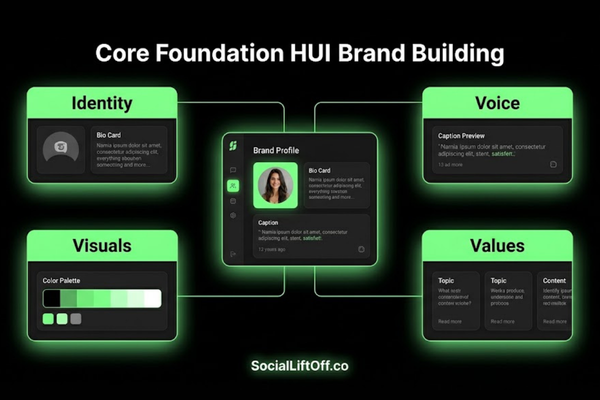
The core components that define a social media brand are voice, visuals, values, audience, content style, and consistency.
6 core components defining a social media brand are listed below.
Voice defines how your brand sounds in captions, comments, replies, stories, and customer messages.
Visuals include your colors, fonts, logo, image style, video style, and profile design.
Values show what your brand believes, supports, avoids, and repeats through daily content.
Audience defines who your content serves, what they need, and what problems they face.
Content style shapes your posts through tips, stories, tutorials, reviews, offers, and updates.
Consistency keeps your brand familiar through repeated topics, timing, tone, and design.
Example: A fitness coach can use bold workout clips, short captions, weekly client wins, and clear fitness tips to build a brand on social media.
How does a social media brand establish its target audience?
A social media brand establishes its target audience by studying who needs the offer, what problems they face, and which platforms they already use.
Target audience research means finding the exact group your brand wants to reach. This includes age, location, goals, income level, buying habits, fears, and content interests.
You should not create posts for everyone. A broad audience creates weak content because the message becomes unclear.
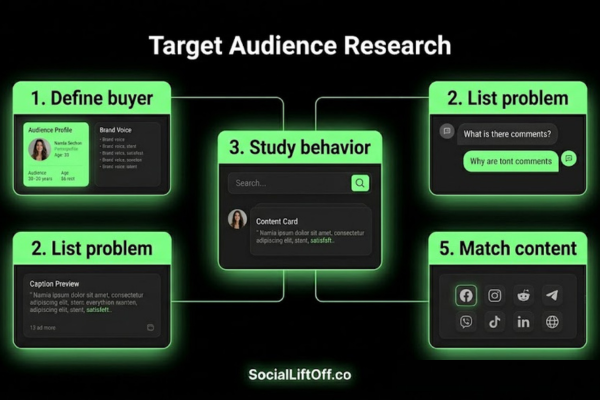
5 steps to establish your target audience are given below.
Define the buyer: Write down the exact person your product or service helps.
List the problem: Identify the daily pain point your audience wants solved.
Study behavior: Check what platforms, pages, groups, and creators they follow.
Review comments: Read questions, complaints, and repeated words from real users.
Match content: Create posts that answer their questions and support their goals.
Example: A small bookkeeping company should target local business owners, not every person interested in finance.
Which platforms maximize a social media brand's visibility?
The platforms that maximize a social media brand's visibility depend on the audience, content format, business type, and growth goal.
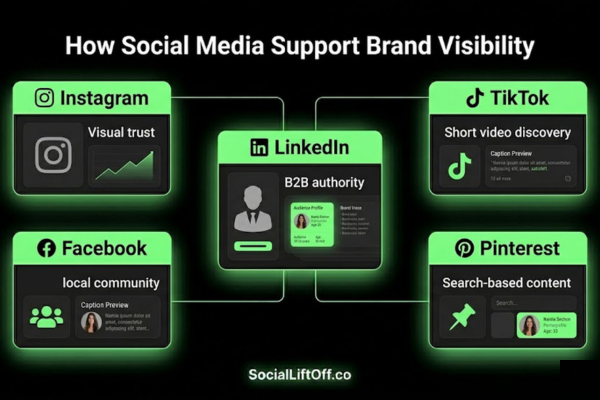
Each platform has a different job. Instagram supports visual trust. LinkedIn supports professional authority. TikTok supports discovery. Facebook supports the local community. Pinterest supports search-based content.
Platform choices to maximize visibility are listed below.
Use Instagram for visuals, Reels, stories, product proof, service proof, and lifestyle content.
Use LinkedIn for B2B brands, expert posts, founder content, case studies, and service authority.
Use TikTok for short-form videos, fast reach, trends, education, and creator-led content.
Use Facebook for local businesses, community updates, groups, reviews, and event-based posts.
Use Pinterest for blogs, home, food, fashion, lifestyle, planning, and evergreen ideas.
Your platform choice should match your content strength. A brand that cannot make regular videos should not depend only on TikTok.
Example: A B2B marketing agency should focus on LinkedIn first, then use Instagram for trust and proof.
How does a social media brand develop a unique voice and visual identity?
A social media brand develops a unique voice and visual identity through repeated language, design rules, content themes, and audience-focused messaging.
Voice means how your brand sounds. Visual identity means how your brand looks. Both should match the same personality.
A playful children’s brand should not sound like a law firm. A serious financial consultant should not use random jokes in every caption.
Your brand voice guidelines should define tone, word choice, caption length, emoji use, reply style, and topics to avoid. Your visual identity should define colors, fonts, image style, templates, and video layout.
Example: A wedding photographer can use soft colors, emotional captions, client stories, and romantic photo edits to build a clear identity.
Visual consistency also supports trust. When users see the same style again, they start to remember the brand faster.
A good brand system is simple enough for daily use. It should help you create posts faster, not slow your team down.
What content strategies accelerate a social media brand's organic growth?
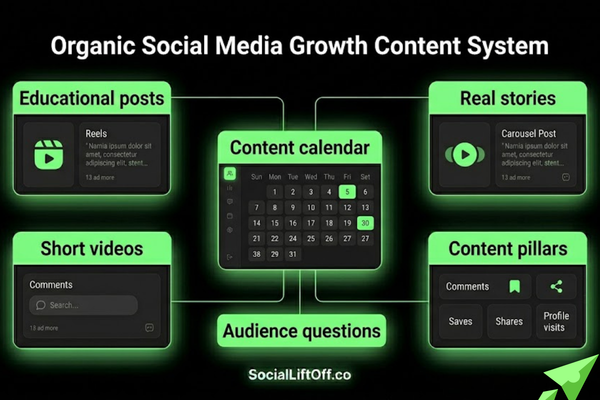
Content strategies that accelerate social media brand organic growth include educational posts, story-based content, short videos, community posts, and planned content themes.
Organic growth means gaining reach without paid ads. It grows when people save, share, comment, and return for more content.
5 content strategies that accelerate organic growth are outlined below.
Teach useful lessons: Share tips, mistakes, checklists, examples, and simple how-to posts.
Share real stories: Show customer wins, founder lessons, behind-the-scenes moments, and problem-solving examples.
Use short videos: Create Reels, TikToks, Shorts, and quick demos around one clear idea.
Ask simple questions: Use polls, comment prompts, and audience questions to start real conversations.
Plan core topics: Build a content pillar strategy around 3 to 5 repeat themes.
Example: A skincare brand can post ingredient tips, routine mistakes, customer results, product demos, and dermatologist-backed advice.
A social media content calendar also helps because it keeps ideas organized before the posting day arrives.
How do you transition a social media brand from organic community building to paid expansion?
Transitioning a social media brand from organic community building to paid expansion requires proof, tracking, and clear offers before running ads.
Paid ads should not replace weak content. Ads work better when organic posts already show what the audience likes, saves, shares, and comments on.
Start with your strongest posts. Check which topics created comments, profile visits, direct messages, email signups, or sales calls. Then turn those proven ideas into paid campaigns.
Example: If a service business gets strong replies from a post about pricing mistakes, that topic can become a paid ad that sends people to a booking page.
Retargeting is also useful. Retargeting means showing ads to people who already watched, clicked, visited, or engaged with your brand.
A brand should move to paid expansion when the message is clear, the audience is defined, and the offer has proof.
Why are social listening tools important to monitor a brand on social media?
Social listening tools are important because they help a brand track mentions, comments, complaints, competitor activity, and audience mood.
Social listening means watching what people say about your brand, industry, competitors, and topics across social platforms.
Social listening tools help a brand because of the following reasons:
Track brand mentions before small issues become public problems.
Find customer questions that can become future posts or FAQs.
Study competitor posts, audience reactions, offers, and content gaps.
Measure audience mood through repeated words, complaints, praise, and reviews.
Spot trends that match your brand before competitors react.
Example: A restaurant can track comments about slow service, popular menu items, and local food trends before updating content.
A social media audit can also help before using these tools because it shows what is already working and what needs fixing.
Should you partner with micro-influencers to build a brand on social media?
Yes, partnering with micro-influencers can help build a brand on social media when their audience matches your buyer and their trust is real.
Micro-influencers are creators with smaller but active audiences. They often have stronger trust than large creators because their followers feel closer to them.
Pros and cons are listed below.
Pros: Micro-influencers can create trust, local reach, product proof, and real content at a lower cost.
Pros: Their followers often ask direct questions and respond to personal product stories.
Pros: Small creators can make content that feels more natural than polished ads.
Cons: Poor audience fit can waste budget and bring weak leads.
Cons: Fake engagement can make a creator look better than they are.
Cons: Loose briefs can create content that does not match your brand voice.
Example: A local gym can work with nearby fitness creators who already post workouts and healthy routines.
How is user-generated content used by a brand on social media?
User-generated content is used by a brand on social media by turning customer photos, reviews, testimonials, comments, and videos into trust-building posts.
User-generated content means content made by customers, fans, or users instead of the brand itself.
This type of content works because people trust real customer proof. A polished brand post can explain value, but a customer post can show real use.
5 ways to use user-generated content include:
Feature customer reviews in simple branded post designs.
Share customer photos after getting permission.
Create branded hashtags for customers to tag their posts.
Turn common customer comments into answer-style posts.
Add testimonial clips to Reels, stories, and product pages.
Example: A clothing brand can repost customer outfit photos and tag each product shown in the image.
Caption quality also matters here. Strong caption writing helps customer proof feel clear, useful, and easy to act on.
What common mistakes disrupt building a brand on social media?
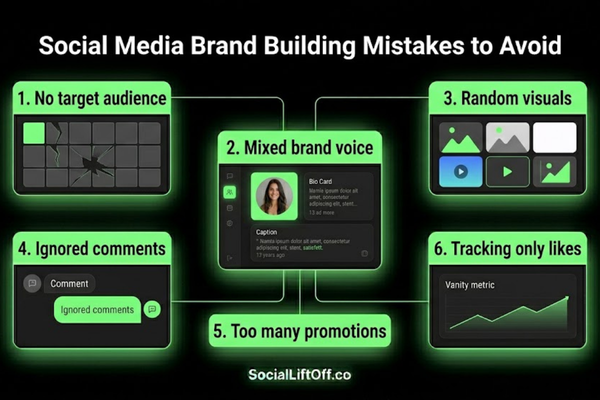
The common mistakes that disrupt building a brand on social media are inconsistency, weak audience focus, random visuals, poor engagement, and vanity metric obsession.
Vanity metrics are numbers that look good but do not always show business value. Likes are one example.
6 common mistakes to avoid are listed below.
Posting without a clear target audience.
Changing brand voice across every platform.
Using random colors, fonts, and templates.
Ignoring comments, messages, reviews, and customer questions.
Posting only promotions without useful education or proof.
Tracking only likes instead of leads, saves, shares, and profile actions.
Example: A service brand that posts memes one day, sales offers the next day, and random quotes after that feels unclear.
Posting too much or too little can also hurt growth. A clear posting frequency helps your brand stay active without overwhelming your team.
Building a brand on social media from scratch is not about posting more than everyone else. It is about building a brand on social media with a clear audience, clear identity, useful content, and steady action.