
What Is Social Media Reach and How to Increase It for Your Business?
Over 5.24 billion people use social media worldwide [site: DataReportal, 2026] — but most businesses never reach even a fraction of their target audience. Social media reach determines how many unique people actually see your content, and it sits at the root of every business result social media can drive: awareness, traffic, leads, bookings, product sales, and customer retention.
This guide covers what social media reach is, how it differs from impressions and engagement, how platforms like Instagram, Facebook, LinkedIn, TikTok, and YouTube each measure it, what affects organic reach, how to build a social media strategy to increase social media reach, and how to measure what works.
What is social media reach?
Social media reach is the number of unique people or accounts that saw your post, story, video, ad, or profile content. It counts people — not repeated views. If one person sees your post three times, reach counts them once.
Reach is a visibility metric. It tells you how wide your content spread across unique accounts. Before anyone can engage, click, or buy, they must first see what you published. That is why social media reach sits at the very top of every content funnel — and why it matters more than most businesses realise.
How is reach different from impressions, views, and engagement?
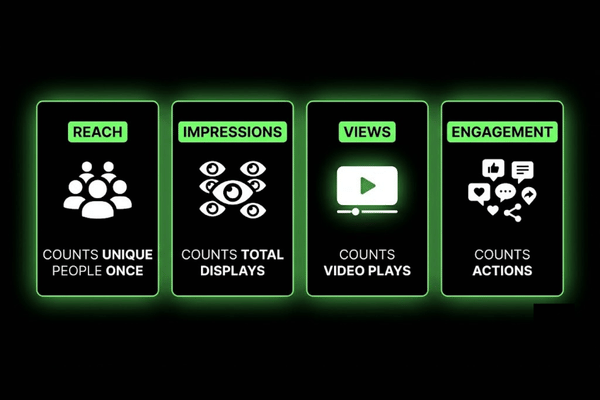
Reach differs from impressions, views, and engagement because each metric measures a different part of content visibility and audience response.
Reach
What it measures: Unique people who saw content
Counts the the samesame person twice? No
Impressions
What it measures: Total times content was displayed
Counts same person twice? Yes
Views
What it measures: Total video plays
Counts the same person twice? Yes, most platforms
Engagement
What it measures: Total actions, including likes, comments, shares, and saves
Counts the same person twice? No
What it measures: Actions ÷ Reach
Counts the same person twice? N/A
Profile Visits
What it measures: Unique viewers who clicked your profile
Counts the same person twice? No
Clicks
What it measures: Link or CTA clicks
Counts the same person twice? No
Example: A post with 1,000 impressions and 600 reach means some people saw it more than once. A 5% engagement rate on 600 reach means 30 people took an action.
What are the main types of social media reach?
The main types of social media reach are organic reach, paid reach, viral reach, follower reach, and non-follower reach.
Organic reach — people who see content through feeds, search, or suggestions without paid promotion
Paid reach — people who see content because a business paid to show it through ads or boosted posts
Viral reach — people who see content because another user shared it, outside of algorithm or ad delivery
Follower reach — existing followers who saw the content in their feed
Non-follower reach — people who do not follow the account but still saw the content; the highest growth signal for businesses
Why does social media reach matter for businesses?
Social media reach matters for businesses because people cannot engage, click, buy, book, or remember a brand they never see.
Brand awareness — reach puts your business in front of new audiences for the first time
Discovery — non-follower reach brings people who have never heard of your brand
Trust — consistent visibility builds familiarity and recognition over time
Local visibility — local reach drives foot traffic, phone calls, and bookings for location-based businesses
Profile visits — higher reach increases the chance someone clicks through to your profile
Website traffic — content seen by more people produces more link clicks
Lead generation — wider visibility creates more entry points into your sales funnel
Customer acquisition — new people seeing your content means more potential buyers
Retargeting audience growth — paid retargeting pools grow when more people see your organic content first
How does social media reach work across platforms?
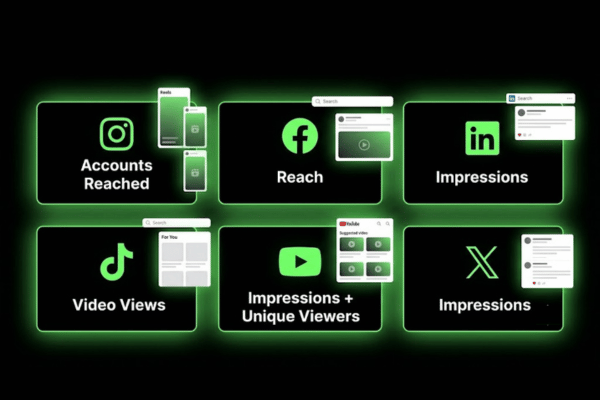
Social media reach works differently across platforms because each network uses different feed rules, discovery surfaces, formats, and analytics labels.
Some platforms label the metric "reach." Others use "views," "impressions," or "unique viewers." The number behind each label still measures content visibility — but the calculation and interface vary enough to confuse most businesses tracking multiple channels.
Instagram
Main metric label: Accounts Reached
Key discovery surface: Reels Feed, Explore, Search
Analytics tool: Instagram Insights
Facebook
Main metric label: Reach
Key discovery surface: News Feed, Reels, Groups
Analytics tool: Meta Business Suite
LinkedIn
Main metric label: Impressions
Key discovery surface: Feed, Search, Notifications
Analytics tool: LinkedIn Analytics
TikTok
Main metric label: Video Views
Key discovery surface: For You Feed
Analytics tool: TikTok Analytics
YouTube
Main metric label: Impressions + Unique Viewers
Key discovery surface: Search, Suggested Videos
Analytics tool: YouTube Studio
X Twitter
Main metric label: Impressions
Key discovery surface: Home Feed, Search
Analytics tool: X Analytics
Example: A LinkedIn post with 2,000 impressions may have reached fewer than 2,000 unique people. A TikTok video with 10,000 views likely reached a large non-follower audience through the For You feed — with no paid spend.
How does Instagram measure reach?
Instagram measures reach through unique accounts that saw content — reported as "Accounts Reached" inside Instagram Insights.
Views have become the primary metric across Instagram formats. Reels show Views at the top. Stories report Reach, Impressions, and Replies side by side. Feed posts display Accounts Reached and Impressions together.
Non-follower reach is the key growth signal on Instagram. A high non-follower percentage means the algorithm pushed content through the Explore page, Reels feed, or hashtag results. Saves and shares feed that signal directly — the more people save or share, the more Instagram distributes the post to new accounts.
Example: A Reel with 4,000 Views and 72% non-follower reach means most of the audience found it without following the account.
How does Facebook measure reach?
Facebook measures reach through the unique people who saw a Page post, ad, story, reel, or Page content — split into organic reach and paid reach inside Meta Business Suite.
Organic reach covers people who saw content through the News Feed or shared links. Paid reach covers content seen through boosted posts or ads. Facebook separates both inside the Insights dashboard.
Organic reach for Facebook Pages has declined significantly without paid support. The platform now favours Reels and Groups for free distribution. Boosted posts extend reach to local audiences, custom audiences, or interest-based segments — making paid the primary growth lever for most businesses on Facebook.
How does LinkedIn measure reach?
LinkedIn commonly reports impressions instead of reach, so businesses should combine impressions, unique viewers, followers, clicks, reactions, and comments to get a full picture.
LinkedIn does show "unique viewers" on creator posts and some company updates. But impressions remain the dominant visibility metric on the platform dashboard. This matters for B2B businesses — impressions on LinkedIn represent decision-makers, executives, and industry professionals, not casual consumers.
Employee advocacy multiplies LinkedIn reach without paid spend. When 50 employees reshare a company post, that post reaches their individual networks at zero extra cost. A structured employee sharing programme is one of the most effective ways to grow organic social media reach in a B2B context.
How do TikTok and YouTube measure reach?
TikTok and YouTube measure reach through video visibility signals — views, impressions, unique viewers, watch time, retention, and traffic sources.
TikTok
Primary metric: Video Views
Secondary metric: Profile Views, Followers Gained
Discovery surface: For You Feed
Analytics tool: TikTok Analytics
YouTube
Primary metric: Impressions
Secondary metric: Unique Viewers, Watch Time
Discovery surface: Search + Suggested
Analytics tool: YouTube Studio
YouTube Shorts
Primary metric: Views
Secondary metric: Subscribers from Shorts
Discovery surface: Shorts Feed
Analytics tool: YouTube Studio
TikTok's For You feed shows content to non-followers first. High watch time and completion rate tell the algorithm to push a video further. YouTube uses impressions (thumbnail shown in search or suggestions) alongside click-through rate (CTR) to decide recommendation volume.
Example: A YouTube video with 5,000 impressions and a 7% CTR earns more recommendations than one with 8,000 impressions and a 2% CTR.
What affects social media reach?
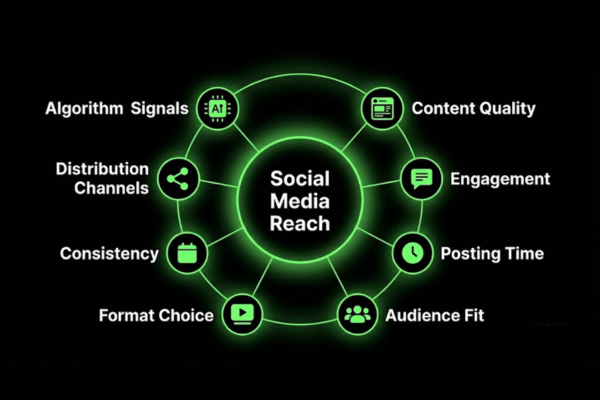
Social media reach is affected by algorithms, content quality, engagement signals, posting time, audience fit, format choice, consistency, and distribution channels.
The main factors that affect social media reach are listed below.
Algorithm signals — relevance scores, freshness, past user behaviour
Content quality — hook strength, visual clarity, original ideas
Engagement signals — likes, comments, shares, saves, watch time
Posting time — audience activity windows per platform
Audience fit — how well content matches what followers care about
Format choice — video, carousel, image, or text post
Consistency — how regularly a business publishes
Distribution channels — organic, paid, viral, or collaborative posting
How do algorithms affect reach?
Algorithms affect reach by deciding which posts appear in feeds, recommendations, search results, and suggested content areas.
Each platform trains its algorithm on past user behaviour. If someone watches gym videos, the algorithm serves more fitness content. If someone scrolls past finance posts, those appear less often. Every interaction — or non-interaction — is data.
Key signals that algorithms use to set reach:
Relevance — does this content match what the user already engages with?
Freshness — newer posts get priority distribution in the first few hours
Engagement prediction — the algorithm estimates likelihood of a reaction before showing the post
Watch time and completion rate — critical for video content on every platform
Originality — platforms reduce distribution for reposted or recycled content
Relationship signals — posts from accounts a user interacts with regularly get higher reach
Format preference — platforms actively promote the format they are currently pushing (Reels, Shorts, carousels)
How does content quality affect reach?
Content quality affects reach because platforms and users respond better to clear, useful, original, and easy-to-consume posts.
When someone scrolls past your content without stopping, the platform reads that as a negative signal. Enough of those signals, and future posts reach fewer people. Platforms track dwell time — how long a user pauses on your content — and reward posts that earn it.
Quality signals that drive organic reach:
Hook — the first line or first frame must stop a scrolling thumb in 2 seconds
Clarity — one idea per post, easy to follow without re-reading
Visual quality — bright, readable, directly relevant to the topic
Caption value — adds context beyond describing the image
Originality — new angles from real experience, not rephrased competitor posts
Relevance — tied to audience interests, not just brand priorities
Example: "I tracked my time for 30 days. Here's the one habit that added 3 hours to my week" outperforms "Tips for staying productive 😊" — because it leads with a specific result, not a generic opener.
How do engagement signals affect reach?
Engagement signals affect reach because likes, comments, shares, saves, clicks, and watch time show platforms that users care about a post — and that it is worth distributing further.
Share
What it tells the algorithm: People found it worth passing on
Relative strength: Very High
Save
What it tells the algorithm: People want to return to it later
Relative strength: Very High
Comment
What it tells the algorithm: People are thinking and responding
Relative strength: High
Click
What it tells the algorithm: People want more information
Relative strength: High
Watch Time
What it tells the algorithm: Video held attention
Relative strength: Very High
Completion Rate
What it tells the algorithm: Video was watched to the end
Relative strength: Very High
Like
What it tells the algorithm: Basic positive response
Relative strength: Medium
Shares and saves carry the most weight on most platforms. A post with 10 saves reaches more new people than a post with 50 likes. Comments from people outside your follower base signal viral potential to the algorithm.
How do posting time and frequency affect reach?
Posting time and frequency affect reach by changing how many people are online and how often a business creates fresh opportunities to be discovered.
Publishing when your audience is active increases early engagement. Early engagement tells the algorithm the post is relevant — which triggers broader distribution. Platform analytics show your specific audience activity windows inside the Insights or Analytics tab.
Frequency matters alongside timing. Posting once per week slows testing and limits algorithm learning. Posting too often with low-quality content trains the platform that your account delivers low value. Platform norms vary:
Instagram — 4–7 Reels per week, 3–5 feed posts per week
LinkedIn — 3–5 times per week for company pages
TikTok — 5–7 times per week for discovery-driven growth
YouTube — 1–2 times per week on consistent upload days
Example: A bakery posting Reels at 7 AM on weekdays reaches the breakfast-scroll audience before competitors post at noon — and captures early engagement hours before the feed gets crowded.
How can businesses increase social media reach?
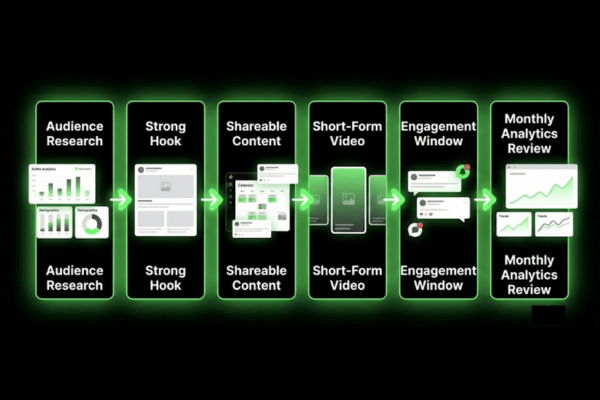
Businesses can increase social media reach by improving audience fit, publishing useful content, using shareable formats, posting consistently, engaging with people, optimising discovery signals, and testing paid distribution.
Practical ways to increase social media reach are listed below.
Research your audience before creating content
Use short-form video to reach non-followers through recommendation feeds
Write hooks that stop scrolling in the first 2 seconds
Post on a consistent schedule — same days, every week
Engage with comments within 60 minutes of publishing
Use niche hashtags and caption keywords for social SEO
Collaborate with creators or complementary businesses
Repurpose top posts across other platforms to multiply reach
Boost posts that already earn strong organic engagement
Review reach metrics every month and adjust based on data
How does audience research improve reach?
Audience research improves reach by helping businesses create posts that match real interests, problems, questions, and platform behaviour.
Without knowing who you are reaching, content becomes guesswork. Platform analytics show demographics — age, location, gender — but psychographics drive better content decisions. What does your audience worry about? What do they search before buying? What do they share with friends?
Demographics
What to find: Age, gender, location
Where to look: Instagram Insights, LinkedIn Analytics
Psychographics
What to find: Interests, values, pain points
Where to look: Comments, DMs, customer reviews
Content Preferences
What to find: Formats they engage with most
Where to look: Top posts by reach in analytics
Buyer Intent
What to find: What they search before a purchase
Where to look: Google Search Console, TikTok search bar
Platform Behaviour
What to find: When online, how long they scroll
Where to look: Platform analytics activity tab
Example: A fitness coach who discovers their audience is working moms aged 30–45 should post 15-minute home workout Reels at 6 AM — not 60-minute gym videos at noon.
How do shareable posts increase reach?
Shareable posts increase reach by turning existing followers, customers, and viewers into distribution channels.
When someone shares your post to their story, their network sees your content at zero cost. This is viral reach. It happens when content is so useful, funny, relatable, or surprising that people want others to see it.
Types of shareable content that consistently expand reach:
Helpful tips — "5 things every first-time homebuyer should check before signing"
Strong opinions — "Cold emails don't work. Here's what does."
Checklists — "Before you post, run this 10-point review"
Emotional stories — before/after transformations, real setbacks with lessons
Social proof — real customer results with specific numbers
Relatable content — situations your audience has lived through personally
Industry insights — data or findings most people in your niche have not seen
Example: A financial advisor posts "The one mistake that cost my client £40,000" — it earns 200 shares because people want their own network to avoid the same error.
How does short-form video increase reach?
Short-form video increases reach by giving platforms high-retention content that the algorithm shows to non-followers through recommendation feeds.
Instagram Reels, TikTok, YouTube Shorts, and Facebook Reels all prioritise video because it holds attention longer than static posts. High watch time signals quality. The algorithm rewards quality by pushing content to audiences who do not yet follow the account — which is exactly how organic reach strategy grows.
Reels
Platform: Instagram, Facebook
Ideal length: 7–30 seconds
Key metric: Views, Shares, Saves
TikTok Video
Platform: TikTok
Ideal length: 15–60 seconds
Key metric: Watch Time, Completion Rate
Shorts
Platform: YouTube
Ideal length: Under 60 seconds
Key metric: Views, Subscribers Gained
Stories
Platform: Instagram, Facebook
Ideal length: 15 seconds per frame
Key metric: Reach, Replies
Hooks decide everything. The first 2–3 seconds determine whether someone keeps watching or scrolls. Add captions — 85% of social videos are watched without sound [site: Verizon Media / Publicis, research study]. Repurpose one video across all four platforms to multiply business social media reach from a single piece of content.
Recommended Video: Search YouTube for "how to increase Instagram Reels reach 2026" to watch a visual guide on hook strategy, posting cadence, and non-follower growth.
How do hashtags, keywords, and captions improve discovery?
Hashtags, keywords, and captions improve discovery by helping platforms understand the topic, audience, location, and search context of content.
Social SEO — using search-friendly language in captions — now affects reach on Instagram, TikTok, LinkedIn, and YouTube. Platforms index post text, on-screen text, and alt text alongside profile information.
Discovery optimisation checklist:
[ ] Use 3–5 niche hashtags (not just popular ones with 10M+ posts where content gets buried)
[ ] Include location hashtags for local businesses (e.g. #ManchesterCafe not just #Cafe)
[ ] Write captions using the words your audience actually searches
[ ] Add alt text to images — platforms read it as content context
[ ] Include on-screen text in videos — platforms index it for search
[ ] Put target keywords in the first 125 characters of every caption
[ ] Add topic tags where available (LinkedIn, TikTok)
[ ] Use your primary keyword in your profile name or bio
Example: A yoga studio in Manchester should use #ManchesterYoga and #YogaForBeginners, and write captions like "morning yoga class Manchester" — not just "namaste 🙏."
How do collaborations and UGC expand reach?
Collaborations and UGC expand reach by placing a business in front of partner audiences, customer networks, and community circles.
UGC means user-generated content — posts, reviews, photos, or videos created by customers about a brand. It costs nothing to produce and carries more trust than branded content. [site: Nielsen Consumer Trust Study, 2023 — 92% of consumers trust peer recommendations over brand advertising]
Collaboration types that grow reach:
Influencer partnerships — creators post about your product to their existing audience
Co-posts — two businesses create content together and both share it to their networks
Customer testimonials — real users share results on their own accounts and tag the business
Employee advocacy — team members share company posts to personal networks
Brand ambassadors — loyal customers post consistently in exchange for perks or early access
Community campaigns — ask followers to tag you or use a branded hashtag
Example: A skincare brand asks customers to tag them in "after" photos. Forty UGC posts in one week means forty pieces of content reaching hundreds of new accounts — at no cost.
How should businesses use paid reach?
Businesses should use paid reach when organic content has a clear goal, strong creative, defined audience, and a trackable next step.
Paid reach is a distribution tool — not a fix for weak content. Boosting a post that nobody engaged with organically wastes budget. Boosting a post that already earns saves and shares amplifies something already working. The goal is not to buy attention. It is to extend the reach that strong organic content already earned.
Grow brand visibility in a new area
Use paid reach? Yes
Recommended type: Awareness campaign
Promote a product launch
Use paid reach? Yes
Recommended type: Boosted post + dedicated ad
Retarget website visitors
Use paid reach? Yes
Recommended type: Retargeting campaign
Build long-term audience trust
Use paid reach? No — use organic
Recommended type: Organic content series
Test which content resonates
Use paid reach? No — test organically first
Recommended type: Organic post with analytics review
Drive event bookings locally
Use paid reach? Yes
Recommended type: Location-targeted boosted post
When should businesses boost posts?
Businesses should boost posts when a post already performs well organically and supports a clear business goal — like awareness, traffic, bookings, or leads.
Do not boost a post because it has low reach. Boost it because it already works. A post earning strong early engagement — comments, saves, shares within the first 24 hours — has proven it resonates. Paid promotion then distributes a proven message to a wider, defined audience.
Decision checklist before boosting:
[ ] Did this post earn above-average engagement in the first 24 hours?
[ ] Does it support a specific goal? (traffic, bookings, leads, event sign-ups)
[ ] Does the post have a direct call to action?
[ ] Is targeting defined? (location, age, interests, or custom audience)
[ ] Is there a set budget and end date?
[ ] Can the result be tracked? (website visits, form completions, calls)
Example: A local restaurant posts a Reel showing a dish — it earns 200 saves in 12 hours. That is a strong candidate to boost with a "book a table" link attached.
How do paid ads increase targeted reach?
Paid ads increase targeted reach by showing content to selected audiences based on location, interests, behaviour, demographics, custom audiences, and lookalikes.
Each platform offers different targeting strengths. Meta (Facebook and Instagram) has the most detailed behavioural targeting available. LinkedIn reaches people by job title, company size, and industry. TikTok targets by interest and in-app behaviour. YouTube targets by search term and topic category.
Meta Ads
Best for: B2C, local, e-commerce
Key targeting feature: Custom + Lookalike audiences
LinkedIn Ads
Best for: B2B, professional services
Key targeting feature: Job title, company size, industry
TikTok Ads
Best for: Young audiences, product discovery
Key targeting feature: Interest + behaviour targeting
YouTube Ads
Best for: Education, product demos
Key targeting feature: Keyword + topic targeting
CPM (cost per thousand impressions) measures paid reach efficiency. A £5 CPM means every 1,000 people reached costs £5. Retargeting campaigns — shown to people who already visited your website or watched your videos — typically produce lower CPM because the audience is warmer.
How should businesses balance organic and paid reach?
Businesses should balance organic and paid reach by using organic content to build trust and paid content to control distribution.
Organic content builds the brand over time. It earns followers, builds credibility, and teaches the algorithm what your audience responds to. Paid content takes the best organic posts and puts them in front of new, precisely defined audiences — without replacing the foundation organic content creates.
Budget framework for balancing paid and organic reach:
Test all content organically first — allow at least 48–72 hours
Identify posts with above-average saves, shares, and comments
Allocate 60–70% of the social budget to promoting proven content
Use 20–30% for retargeting warm audiences (website visitors, video viewers)
Keep 10–15% for awareness campaigns targeting cold, new audiences
Example: A B2B software business spends £500/month on LinkedIn. £300 boosts top-performing posts. £150 retargets people who visited the pricing page. £50 runs awareness ads to new job titles.
How should businesses measure social media reach?
Businesses should measure social media reach by tracking unique viewers, non-follower reach, impressions, engagement rate, profile actions, website clicks, leads, and conversions together.
Reach alone does not equal results. A post can reach 10,000 people and generate zero leads. Pairing reach data with downstream actions — profile visits, website clicks, form completions — shows whether visibility is producing business outcomes.
Use UTM links on every social post that sends traffic to a website. Tag campaigns so Google Analytics can show which platform and post drove the visit. Set reporting periods: weekly for active campaigns, monthly for trend analysis, and quarterly for strategy review.
Which reach metrics should businesses track?
Businesses should track reach metrics that show visibility, audience quality, content spread, and business action.
Total Reach
What it shows: Unique people who saw content
Platform: All platforms
Non-Follower Reach
What it shows: New audience reached outside followers
Platform: Instagram, TikTok
Follower Reach
What it shows: Existing followers who saw the content
Platform: Instagram, Facebook
Impressions
What it shows: Total times content was displayed
Platform: All platforms
Shares
What it shows: How often users passed the content on
Platform: Instagram, Facebook, LinkedIn
Saves
What it shows: Bookmarked for later by users
Platform: Instagram, Facebook
Profile Visits
What it shows: Users who clicked through to the profile
Platform: Instagram, TikTok
Website Clicks
What it shows: Link clicks from posts or bio
Platform: All platforms
CTR
What it shows: Click-through rate on links or ads
Platform: Paid campaigns
Conversions
What it shows: Sales, leads, or bookings from social
Platform: Via UTM + CRM
Example: A post with 3,000 reach, 80 saves, 40 profile visits, and 15 website clicks shows a clear path from visibility to intent — and each number tells you where the drop-off happened.
How do reach metrics connect to business goals?
Reach metrics connect to business goals when each visibility number is tied to an action — awareness, traffic, leads, sales, or retention.
Brand Awareness
Primary reach metric: Total Reach, Impressions
Supporting metric: New Followers, Profile Visits
Website Traffic
Primary reach metric: Website Clicks, CTR
Supporting metric: UTM sessions in Google Analytics
Lead Generation
Primary reach metric: Non-Follower Reach
Supporting metric: Form fills, DM enquiries
Product Sales
Primary reach metric: Paid Reach, Retargeting Reach
Supporting metric: Conversions, Revenue attributed
Customer Retention
Primary reach metric: Follower Reach
Supporting metric: Saves, DM replies, Return visits
Event Bookings
Primary reach metric: Local Reach
Supporting metric: Event RSVPs, Direction requests
A reach number means nothing without a connected goal. If the goal is lead generation but website clicks stay flat despite growing reach, the content or call to action needs review — not just the distribution method.
What tools help track social media reach?
Tools that help track social media reach include native platform analytics, Meta Business Suite, Instagram Insights, LinkedIn Analytics, YouTube Studio, TikTok Analytics, Google Analytics, and social media management platforms.
Meta Business Suite
What it tracks: Facebook + Instagram reach, engagement, ads
Best for: Managing both platforms together
Instagram Insights
What it tracks: Reach, impressions, saves, non-follower reach
Best for: Instagram organic performance
LinkedIn Analytics
What it tracks: Impressions, unique viewers, follower growth
Best for: B2B visibility tracking
YouTube Studio
What it tracks: Impressions, CTR, watch time, unique viewers
Best for: Video reach and retention
TikTok Analytics
What it tracks: Views, reach, followers, traffic sources
Best for: Short-form video performance
Google Analytics 4
What it tracks: Social traffic, sessions, conversions
Best for: Cross-platform website attribution
Later, Buffer, Hootsuite
What it tracks: Scheduled posting + reach reports
Best for: Multi-platform management
Sprout Social
What it tracks: Cross-platform reach + team reporting
Best for: Agency and enterprise teams
Google Analytics 4 (GA4) is free and connects social traffic to website behaviour — showing which platform drives real business action, not just impressions.
What systems help businesses manage social media reach?
Systems that help businesses manage social media reach include a content calendar, repurposing workflow, engagement process, testing routine, and monthly reach audit.
Moving from individual tactics to repeatable systems makes reach growth predictable rather than accidental. A content calendar prevents posting gaps. A repurposing workflow multiplies reach from every idea. A monthly reach audit surfaces what is working before the window to act on it closes.
Core system components:
Content calendar — planned topics, formats, platforms, and posting times
Asset library — saved templates, brand images, and caption formulas
Engagement window — 30–60 minutes after publishing to respond to comments
Repurposing workflow — rules for turning each piece of content into 3–5 platform versions
Monthly reach audit — review top 5 posts by reach and compare to the previous month
Testing routine — one new format or topic tested every week
How should businesses build a reach-focused content calendar?
Businesses should build a reach-focused content calendar by planning topics, formats, platforms, posting times, CTAs, and testing notes before publishing.
Define 3–5 content pillars — core topics your audience cares about most
Assign one pillar per day of the week
Map each pillar to a format — video, carousel, image, text post
Set platform-specific posting times using your analytics activity data
Add seasonal campaigns and product launches at least 2 weeks ahead
Include one evergreen post per week — content that stays useful year-round
Add one test post per week — new format, new hook style, or new topic
Schedule a weekly 15-minute analytics review every Friday
Log results in a simple spreadsheet — reach, saves, shares, and website clicks per post
Example: A content pillar for a law firm might be "common legal mistakes." Monday = Reel (one mistake in 30 seconds). Thursday = carousel (checklist version). Evergreen post = "Can your employer legally read your emails?"
How can teams repurpose content to increase reach?
Teams can repurpose content to increase reach by turning one idea into multiple formats across different platforms.
One strong idea should never live in only one place. A 1,000-word blog post contains at least 5 social posts. A 10-minute YouTube video contains at least 3 Reels. A client case study produces at least 4 formats across 3 platforms.
Blog post
Repurposed format: Carousel, key points as slides
Platform: Instagram, LinkedIn
YouTube video
Repurposed format: Reel, 30-second highlight
Platform: Instagram, TikTok, Facebook
Podcast episode
Repurposed format: Short quote audiogram
Platform: Instagram Stories, LinkedIn
Webinar recording
Repurposed format: Clip series, 3–5 key moments
Platform: YouTube Shorts, TikTok
Email newsletter
Repurposed format: LinkedIn text post
Platform: LinkedIn
FAQ page
Repurposed format: Q&A Reel series
Platform: Instagram, TikTok
Customer review
Repurposed format: Designed quote graphic
Platform: Instagram Feed, Facebook
Example: A business coach records a 45-minute webinar. The output: 4 Reels, 1 LinkedIn post, 1 carousel, 1 full YouTube video. One hour of content becomes 7 posts across 4 platforms — each targeting the same idea through a different format and audience.
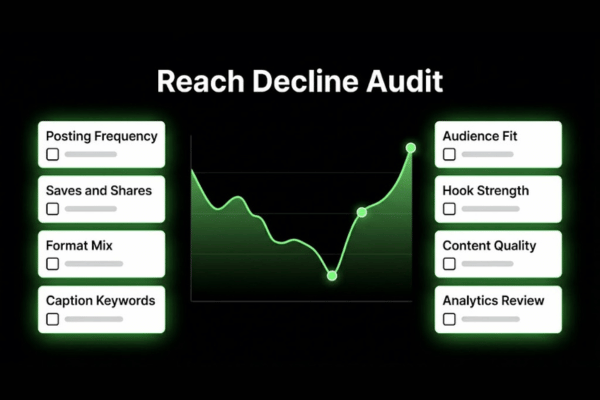
How should businesses diagnose declining reach?
Businesses should diagnose declining reach by checking content quality, audience fit, posting consistency, engagement rate, format mix, algorithm shifts, and platform analytics.
Declining organic reach rarely has one cause. It is a combination of content fatigue, posting gaps, and algorithm changes working together over weeks.
Diagnostic checklist:
[ ] Has posting frequency dropped in the last 30 days?
[ ] Are saves, shares, and comments lower than the previous month?
[ ] Has the format mix shifted toward fewer videos and more static images?
[ ] Are captions shorter or missing keywords?
[ ] Has a platform announced a feed algorithm update?
[ ] Are topics still matching what followers originally signed up for?
[ ] Has the account posted recycled or reposted content recently?
[ ] Is the hook on recent videos weaker than previous top posts?
Run a 30-day best-post analysis. Pull the top 5 posts by reach from the previous 90 days. Compare their format, topic, hook, posting time, and caption length to recent underperforming posts. The pattern almost always shows exactly what changed.
What mistakes reduce social media reach?
Mistakes that reduce social media reach include unclear content, weak hooks, inconsistent posting, poor audience fit, low engagement, over-promotion, and no measurement.
Most reach problems come from repeated content habits — not algorithm penalties. Businesses lose reach by making the same mistakes week after week without reviewing their analytics.
Overview of reach-reducing mistakes:
Weak or missing hook in the first line or first frame
Generic visuals that look identical to every competing post
More than 4–5 days between posts with no publishing schedule
Over-promotional content (more than 30% of posts are sales messages)
No call to action on posts that have a specific goal
Using only popular hashtags with 10M+ posts where content gets buried
Ignoring comments within the first hour of posting
Posting the same format every time with no variety
No monthly review of reach data — no way to improve without data
Why does low-quality content reduce reach?
Low-quality content reduces reach because users scroll past it, ignore it, or avoid sharing it with others.
Platforms track how quickly users leave after seeing a post — called dwell time. Too many scrolls-without-stopping reduce future distribution. The algorithm treats skipped content as a signal that the post is not worth showing to more people.
Weak hook
What it looks like: First line is generic, such as "Welcome to our page!"
Fix: Lead with a fact, question, or bold statement
Unclear message
What it looks like: Post tries to say three different things
Fix: One idea per post, one CTA
Poor visuals
What it looks like: Blurry image, cluttered text overlay
Fix: Use clean layouts and consistent brand colours
Generic caption
What it looks like: "Check out our latest product!"
Fix: Explain why it matters to the reader
Copied ideas
What it looks like: Screenshots of other people's posts
Fix: Create original insights from direct experience
No useful takeaway
What it looks like: Post ends with no clear value
Fix: End every post with something actionable
Example: "Happy Monday! Here are some productivity tips 😊" gets scrolled. "I tracked my time for 30 days. Here's the one habit that added 3 hours to my week's savings.
How does inconsistent posting hurt reach?
Inconsistent posting hurts reach by reducing testing speed, audience memory, algorithm signals, and content learning.
When a business posts once every 10 days, the algorithm has too little data to build a pattern. It cannot identify what works. Followers forget the account exists. Engagement drops. Reach contracts.
Common reasons businesses post inconsistently:
No content calendar — topics are decided the day of posting
No content batching — each post is created from scratch each time
No team accountability — nobody owns the publishing schedule
Burnout — posting daily without a system is not sustainable long-term
The solution is not to post more — it is to post on a fixed schedule. Three quality posts per week, published consistently every week, outperform seven random posts published whenever time allows.
Example: A financial advisor who posts every Monday, Wednesday, and Friday for 8 straight weeks builds more algorithm trust than one who posts 12 times in week one, then goes silent for three weeks.
How can businesses recover low reach?
Businesses can recover low reach by auditing content, testing new formats, improving hooks, posting consistently, increasing engagement, and reviewing analytics monthly.
Recovery takes 30–60 days of consistent action. No single post fixes declining reach. The system needs to change before the numbers shift.
Recovery checklist:
[ ] Pull the last 30 days of reach data from platform analytics
[ ] Identify the top 3 posts by reach — what did they share in common?
[ ] Post a short-form video 3 times this week, even if imperfect
[ ] Refresh hashtag sets — remove tags with over 1 million posts
[ ] Add a clear CTA to every post this week ("Save this," "Comment below," "Share with a friend")
[ ] Respond to every comment within 2 hours of publishing
[ ] Test one collaboration post or UGC repost this month
[ ] Commit to a 30-day consistent posting streak — same days, every week
Example: A salon that has lost reach posts a "before and after" Reel every Tuesday for 4 weeks, replies to every comment, and asks clients to tag them. By week 4, non-follower reach climbs again.
Social Media Reach FAQs
Social media reach FAQs answer the short questions business owners ask before tracking, improving, or paying for their reach. Each answer below is self-contained.
What is a good social media reach rate?
A good social media reach rate depends on the platform, audience size, content format, industry, and campaign goal.
For organic reach, 1–5% of total followers is common on Facebook and Instagram for standard posts. Reels and short-form video regularly reach 10–30% or higher. Smaller accounts (under 10,000 followers) typically see higher reach rates than larger ones. The most useful benchmark is your own past performance — compare each month to the previous one, not to industry averages you cannot verify.
Is reach more important than engagement?
Reach is not more important than engagement because both metrics answer different questions.
Reach shows how many people saw content. Engagement shows whether those people cared enough to act. High reach with no engagement means the content is visible but not resonating. High engagement with low reach means the content works but is not being distributed widely enough. A healthy account needs both — reach to grow and engagement to retain.
Can you increase reach without ads?
Yes, businesses can increase reach without ads by improving content quality, posting consistently, using shareable formats, engaging with comments, collaborating with others, and using hashtags and caption keywords.
Short-form video is the fastest free path to non-follower reach on Instagram, TikTok, and YouTube. Collaborations with other creators or local businesses immediately expose content to new audiences. Niche hashtags and caption keywords improve search-based discovery. These organic reach tactics compound over months — unlike paid reach, which stops the moment a budget runs out.
How long does it take to increase social media reach?
Social media reach can improve within weeks, but stable reach growth needs consistent posting, testing, engagement, and monthly review.
30 days — enough to identify which formats earn the highest reach for your account
60 days — enough to spot a consistent weekly trend and confirm what is working
90 days — enough to build a repeatable system and establish audience memory
Most accounts see measurable improvement within 4–6 weeks when they post consistently, use short-form video, and engage actively with comments. Building consistent social media reach through tested content and a fixed posting schedule is the approach that holds — viral reach is unpredictable, but a reliable system is not.